(650) 522-4653

What Are China Best Municipal Golf Course Suppliers?

A municipal golf course is more than fairways, greens, and attractive clubhouse furniture. It is a public asset that must support safe play, controlled maintenance costs, and long-term community use. The National Golf Foundation’s 2024 U.S. Golf Facilities data identifies more than 16,000 golf facilities in the United States, with public access forming the largest segment. This scale highlights an important question: which suppliers can deliver durable products without inflating lifecycle expenses?

Global demand also provides useful context. The R&A’s Golf Around the World 2023 report recorded more than 38,000 golf facilities across 206 countries and territories. However, international scale does not automatically prove supplier quality. A factory may show polished photographs, yet the real test is different. Can its drainage channels withstand repeated rainfall? Do its golf carts maintain battery performance after daily municipal use? Are replacement parts available when a control panel fails?

This guide examines China’s leading municipal golf course suppliers through practical and verifiable criteria. These include manufacturing experience, material standards, quality-control procedures, customization capability, export records, after-sales support, and project references. Supplier certifications should be checked against current documentation, not marketing claims. Site visits, sample testing, and independent inspections remain valuable, even when budgets are tight. Some comparisons may seem imperfect because supplier data is not always disclosed consistently. That limitation deserves attention. Still, a clear evaluation framework can help municipalities compare turf equipment, irrigation systems, carts, lighting, furniture, and maintenance solutions with greater confidence.
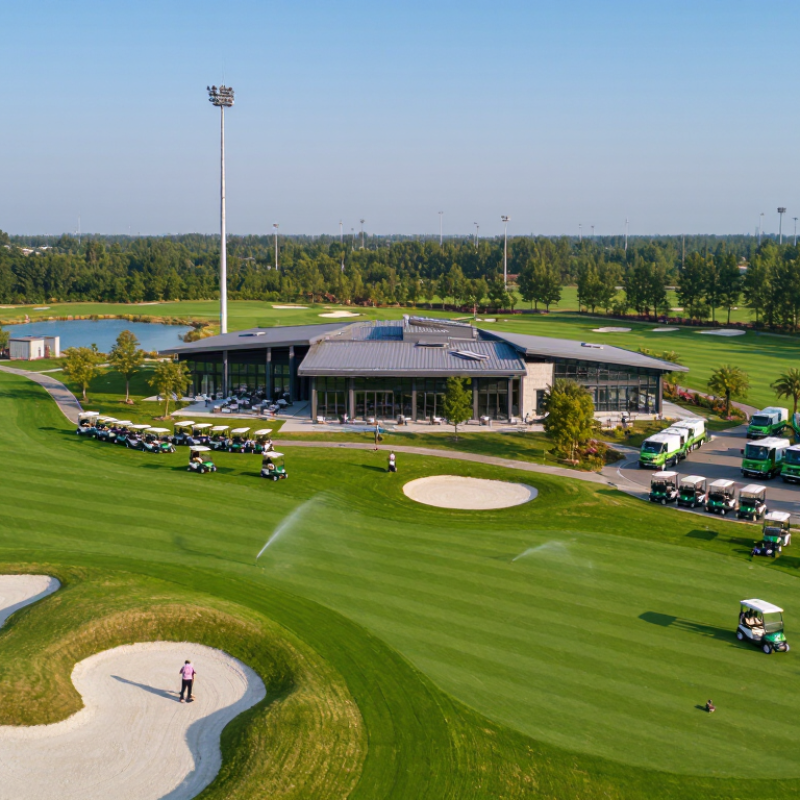
What Are China Best Municipal Golf Course Suppliers?

What Defines a Municipal Golf Course Supplier in China?

A municipal golf course supplier in China is more than an equipment seller. It must understand public procurement, local climate, water limits, and community access. The 2023 Global Golf Participation Report recorded 66.6 million golfers worldwide. This growth increases pressure on cities to build practical, inclusive facilities.

A capable supplier provides complete support, from turf planning to irrigation control and maintenance training. Field experience matters. A technician should inspect soil drainage, pump rooms, grass height, and replacement-part storage. Small failures become expensive when a public course serves schools, residents, and tournaments.

Data should guide every decision. The World Resources Institute reports that agriculture uses about 70% of global freshwater withdrawals. Therefore, suppliers should offer measured irrigation, leak alarms, recycled water options, and drought-tolerant turf plans.

Clear maintenance records also help municipal managers verify performance and spending. Many proposals still focus too heavily on installation price. That is a weakness.

Reliable suppliers explain lifecycle costs, response times, warranty limits, and staff training in plain English and Chinese. They should provide test reports and documented project references. A perfect specification is rarely possible. Local soil and rainfall can challenge even careful designs. Suppliers that admit these risks usually make better long-term partners.

How China’s Municipal Golf Course Suppliers Are Classified

What Are China’s Best Municipal Golf Course Suppliers?

China’s municipal golf course suppliers are commonly classified by service scope, not only by product type. Core categories include planning consultants, course contractors, turf suppliers, irrigation specialists, maintenance equipment providers, and long-term technical service teams. This structure helps public buyers compare installation quality, operating support, and lifecycle cost.

The R&A’s Golf Around the World 2023 report recorded 66.6 million golfers and 43,026 golf courses worldwide. Its regional data also shows China as a significant Asian golf market, although facility counts should be checked against local government records. In practice, a municipal project may need several supplier classes. A turf supplier handles grass selection and soil testing. An irrigation contractor checks pipe pressure, drainage, and water efficiency. A maintenance supplier provides mowers, aerators, and service training. A design consultant coordinates circulation, safety, and accessible public spaces. These roles overlap. That is where evaluation becomes difficult.

Tips Request three years of project evidence, maintenance response times, and water-use data. Ask for soil test samples. Check spare-part availability before signing.

A neat classification can mislead. A low equipment price may create higher labor costs later. The 2023 Global Economic Impact of Golf report also links golf facilities with tourism, employment, and environmental management, but local results vary widely. Buyers should therefore score suppliers on measurable outcomes, not attractive brochures. A supplier with strong municipal experience may still need better ecological planning. This is an uncomfortable point, but it matters.

What Products and Services Do These Suppliers Provide?

Municipal golf course suppliers provide more than clubs, carts, and practice equipment. They support daily operations, public access, and long-term course performance. The National Golf Foundation reported more than 500 million rounds played in the United States during 2023. This volume creates steady demand for durable turf equipment, irrigation components, golf carts, range balls, maintenance tools, and booking systems.

Water management is a major service area. Suppliers may provide soil sensors, weather-based controllers, pumps, drainage materials, and recycled-water systems. The R&A’s Golf Around the World 2023 report identified more than 40,000 golf facilities worldwide, showing the scale of infrastructure needs. Reliable suppliers also offer installation, calibration, emergency repairs, and staff training. Small details matter. A poorly adjusted sprinkler can leave dry patches beside flooded turf.

Municipal buyers often need lifecycle support rather than the lowest purchase price. Services can include fleet maintenance, equipment leasing, turf-consulting, safety inspections, and replacement planning. Energy-efficient mowing equipment may reduce operating costs, although real savings depend on terrain, staffing, and charging access. That part is sometimes overlooked. Suppliers should provide transparent warranties, maintenance records, and measurable performance data. Yet no package is perfect; local soil, weather, budgets, and golfer behavior can change results quickly. Procurement teams should test equipment on-site before making large commitments.

How to Evaluate Supplier Quality, Compliance, and Capacity

Choosing China’s best municipal golf course suppliers requires more than comparing prices. Quality begins with materials, production controls, and installation experience. Request turf samples, drainage layouts, irrigation specifications, and recent project records. Inspect fiber density, backing strength, color stability, and surface recovery after heavy use. A supplier should explain testing methods clearly, not hide behind attractive brochures. Brochures are not proof.

Compliance needs written evidence. Ask for material safety data, factory quality procedures, inspection reports, and documentation supporting local construction requirements. Confirm whether products meet applicable environmental, fire, electrical, and public safety standards. Check how waste, packaging, and chemical products are handled. Certificates should show issuing bodies, test dates, product names, and valid scopes. A copied certificate creates doubt. Independent verification is worth the extra time.

Capacity becomes visible during pressure. Review monthly production output, equipment condition, staffing, and quality checkpoints. Ask for a realistic delivery schedule, including customs clearance and replacement materials. A capable supplier can provide drawings, installation guidance, maintenance training, and spare parts after handover. Visit the factory if possible. Observe storage areas and unfinished goods; disorder may reveal future problems. One weakness remains easy to miss: suppliers may perform well on a sample project but struggle with municipal scale. A pilot installation, staged inspection, and written acceptance criteria can expose that gap before the full course is built.

What Are China’s Best Municipal Golf Course Suppliers?

Supplier Evaluation Model: Quality, Compliance, and Capacity

This 100-point screening model prioritizes product quality and regulatory compliance while also assessing production capacity and after-sales support. Buyers should verify ISO 9001 quality systems, relevant environmental and occupational-safety certifications, product test reports, applicable Chinese standards, delivery records, and service capability before selecting a municipal golf course supplier.

How to Select the Right Supplier for a Municipal Golf Project

Selecting the right supplier for a municipal golf project requires more than comparing prices. Start with local project experience. Ask for completed courses with similar soil, rainfall, and public-use demands. Inspect drainage channels, tee surfaces, cart paths, and irrigation controls if possible. These details reveal workmanship better than polished brochures.

Request technical documents for turf systems, pumps, lighting, and maintenance equipment. Confirm material specifications, testing records, installation procedures, and warranty terms. A reliable supplier should explain expected service life and replacement costs clearly. Their engineers should also coordinate with architects, contractors, and municipal maintenance teams. Communication matters.

Check references directly. Ask whether deliveries arrived on schedule and whether problems were solved without hidden charges. A low quotation may exclude training, spare parts, or seasonal adjustments. Read every allowance carefully. No supplier is flawless. A sample may look excellent while large-scale installation exposes weaknesses. Use a trial area before approving major quantities. Include inspection points in the contract, especially for grading, drainage, turf establishment, and irrigation pressure.

Municipal courses face heavy traffic and tight operating budgets. Choose a supplier that understands lifecycle value, not only initial cost. Staff training should include daily inspections, water management, and basic repairs. Confirm local technical support and clear response times. Independent testing can strengthen confidence, although it adds time and expense. That trade-off is easy to underestimate. A careful selection process may feel slower, but it reduces disruptive repairs after opening.

What Are China Best Municipal Golf Course Suppliers? - How to Select the Right Supplier for a Municipal Golf Project

Evaluation Dimension Recommended Project Requirement Practical Data or Benchmark Documents or Evidence to Request Suggested Weight
Relevant Municipal Experience Select suppliers with experience in public golf courses, sports facilities, parks, or other high-use landscaped sites. Give preference to suppliers able to provide at least 3 comparable project references completed within the previous 5 years. Project list, client references, completion certificates, site photographs, and maintenance records. 15%
Irrigation System Capability The supplier should design or provide irrigation equipment that supports zoning, pressure control, weather-based scheduling, and flow monitoring. Require head-to-head sprinkler coverage, measurable flow control, isolation valves, filtration, and a documented commissioning plan. Hydraulic calculations, pipe schedules, sprinkler layout, pump curves, control-system specifications, and commissioning reports. 18%
Water-Efficiency Management Prioritize solutions that allow irrigation to be adjusted according to rainfall, evapotranspiration, soil moisture, and actual plant demand. The system should record water use by zone or major course area and support seasonal irrigation schedules. Water-metering plan, controller functions, sensor specifications, data-export capability, and water-management procedures. 12%
Drainage and Site Resilience The proposal should address stormwater, saturated soil, erosion, pond overflow, and access routes used by maintenance vehicles. Require a site-specific drainage plan based on topography, soil conditions, rainfall data, and discharge requirements. Topographic survey, soil investigation, drainage calculations, stormwater plan, and local regulatory approvals where applicable. 12%
Material and Equipment Durability Components must be suitable for continuous outdoor exposure, wet conditions, ultraviolet radiation, fertilizer contact, and frequent public use. Outdoor electrical enclosures should have an appropriate IP protection rating; metallic components should include corrosion-resistant materials or protective coatings. Material certificates, corrosion-protection details, IP test reports where relevant, operating-temperature data, and service-life assumptions. 10%
Safety and Regulatory Compliance All products and installation work should comply with applicable Chinese construction, electrical, water-management, occupational-safety, and environmental requirements. A complete compliance file should be available before delivery and updated after installation and testing. Product certificates, inspection reports, electrical test records, safety method statements, and applicable local approvals. 10%
Quality Management Use suppliers with documented quality-control procedures covering raw materials, assembly, testing, packaging, installation, and corrective action. ISO 9001 certification is useful evidence of a quality-management system, but it should not replace product-specific testing and inspection. Valid certification, inspection and test plans, factory-acceptance procedures, nonconformance records, and sample test results. 8%
Installation and Commissioning The supplier should provide installation supervision, pressure testing, electrical testing, control calibration, zone testing, and operator training. Require as-built drawings, test records, operating manuals, spare-parts lists, and formal handover documentation. Method statements, commissioning checklist, training agenda, as-built documentation, and signed acceptance records. 8%
After-Sales Service and Spare Parts Municipal operators should be able to obtain technical support, replacement parts, troubleshooting, and preventive-maintenance assistance throughout the planned service period. Set a contractual response-time target, define critical spare parts, and require clear warranty exclusions and service procedures. Warranty terms, service-level agreement, spare-parts catalogue, technician qualifications, inventory plan, and escalation contacts. 10%
Whole-Life Cost Evaluate purchase price together with installation, energy, water, chemicals, labor, maintenance, replacement parts, and disposal costs. Use a lifecycle-cost model covering the planned operating period rather than comparing equipment prices alone. Itemized quotation, energy and water assumptions, maintenance schedule, consumables list, replacement intervals, and lifecycle-cost calculation. 7%
Total Evaluation Weight 100%

Recommended evaluation method: score each supplier from 1 to 5 for every dimension, multiply the score by the suggested weight, and verify all mandatory safety, regulatory, testing, and handover requirements before commercial comparison.

Contact Us

Phone: (650) - 522-4653 (GOLF)

Fax: (650) 522-7511

Tee Time Reservations: (650) 522-4653 (GOLF)

Location

1700 Coyote Point Drive

San Mateo, CA 94401