(650) 522-4653

How to Choose the Best Champion Golf Club for Your Store?

Choosing the right champion golf club for your store requires more than comparing logos, lofts, or wholesale prices. It requires evidence, customer knowledge, and careful product testing. The National Golf Foundation reported that approximately 45 million Americans played golf in 2023, including on-course and off-course participation. This expanding audience includes beginners, club golfers, younger players, and highly experienced buyers. Each group expects different performance, comfort, and value.

The R&A’s Golf Around the World report recorded about 66.6 million adult golfers across 206 countries and territories. That global scale creates opportunity, but it also increases product complexity. A suitable champion golf club should match your store’s customer profile, climate, price range, and fitting capability. Shaft flex, head design, grip size, forgiveness, and left-handed availability all deserve practical review. SFIA participation research also shows continued interest in golf equipment and recreational play in the United States. Numbers matter.

Real store experience matters more. A club that sells well online may feel too heavy in a fitting bay. A visually impressive model may produce inconsistent launch results. Ask suppliers for testing data, warranty terms, minimum order quantities, and replacement support. Then compare those details with customer feedback and return patterns. Do not trust impressive claims alone.

No buying guide is perfect. A product can perform well yet remain difficult to explain. This guide examines the evidence behind selection, stocking, and in-store testing. It also highlights common purchasing mistakes, because even experienced retailers can overestimate demand or ignore fitting needs.
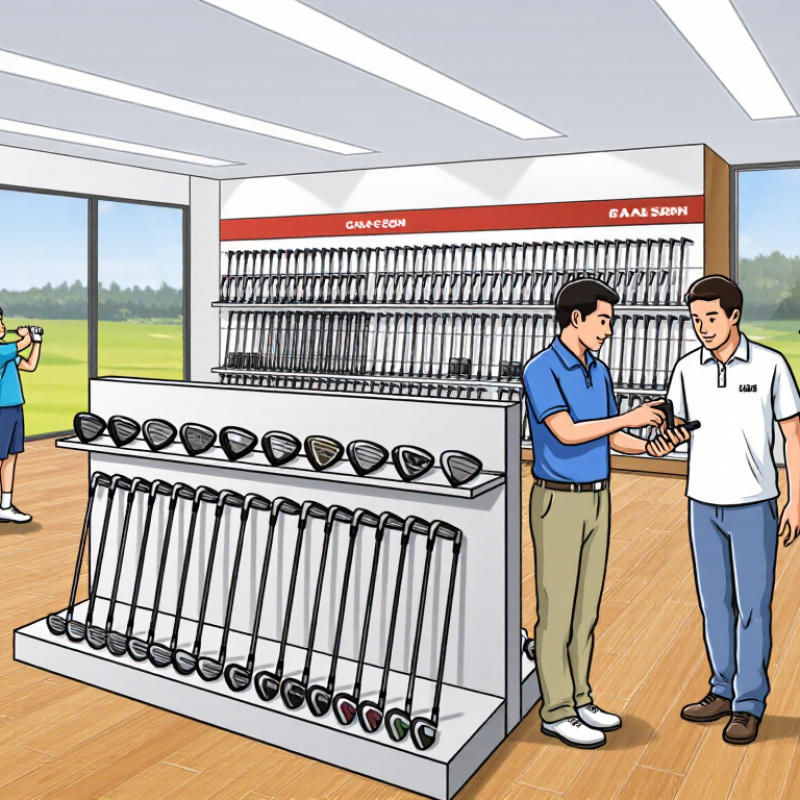
How to Choose the Best Champion Golf Club for Your Store?

Define Your Target Golfer Using NGF’s 2023 Participation Data

Choosing the best champion golf club starts with knowing who will buy it. NGF’s 2023 participation data offers a useful market lens for store planning. About 45 million Americans aged six and older played golf in some form. Roughly 28 million played on a course, while others used simulators, practice facilities, or entertainment venues. These groups do not shop for the same club.

Course regulars may value distance control, fitting support, and durable grips. Newer golfers often need forgiveness, lighter construction, and simple guidance. Junior and women golfers also deserve specific attention, rather than smaller versions of one generic customer. NGF data shows broad participation, but it cannot identify your local shaft preferences or price limits. That gap requires store-level evidence. Watch which customers ask about launch height, carry distance, or easier contact. Review returns, fitting notes, and left-handed requests each month.

Build a small test wall around these patterns. Stock one forgiving option, one balanced game-improvement option, and one choice for confident players. Let shoppers hit balls, compare dispersion, and describe the feel. Keep testing. My practical mistake was treating high participation as proof of high-end demand. It was not. A busy beginner clinic may sell more approachable clubs than premium-looking equipment. Use the data, but question it against checkout records, seasonal demand, and local course culture.

Verify USGA/R&A Compliance: 460cc Heads, 48-Inch Drivers, 0.830 COR

When choosing a champion golf club for your store, compliance should guide every purchase. A club may look powerful, yet fail a tournament inspection. Check the current equipment rules before accepting supplier specifications. The critical limits are clear: a driver head cannot exceed 460cc, driver length cannot exceed 48 inches, and the coefficient of restitution cannot exceed 0.830.

Ask suppliers for written test data, not broad claims. Confirm head volume through measured specifications and request the exact length from grip end to sole. COR testing also needs attention. It measures energy transfer during impact, so manufacturing tolerances matter. A model listed at 0.830 may still require independent verification. Small differences can create costly returns. Keep test reports, samples, and production records together.

Market demand supports careful selection. The 2024 National Golf Foundation Golf Participation Report recorded 26.6 million U.S. on-course golfers in 2023. That large customer base includes competitive players, club fitters, and casual buyers. The 2024 global participation report from the sport’s international governing body estimated 66.6 million golfers across 206 countries. Compliance can therefore protect more than tournament sales. It supports retailer credibility across markets. I have seen buyers focus too heavily on distance claims. That is a mistake worth revisiting. A compliant club with stable production quality is usually the safer inventory choice. Ask for current documentation. Do not rely on an old catalog.

Match Loft, Shaft Flex, MOI, and Swing-Speed Data to Customer Needs

How to Choose the Best Champion Golf Club for Your Store?

Match loft, shaft flex, MOI, and swing-speed data to real customer needs. A launch monitor should guide the conversation, not a swing-speed label alone. TrackMan’s published player averages place male amateurs near 93 mph and female amateurs near 65 mph. These figures offer context, not a final fitting rule.

For slower swings, higher loft can help launch a longer, more stable flight. Faster players may need lower loft or a firmer shaft to control excess spin. Shaft flex should follow tempo, transition, and impact pattern. It should not depend only on age or gender. MOI matters when customers miss the center. Higher MOI can preserve ball speed and direction on toe or heel strikes. The 2021 Distance Insights Report from the USGA and R&A recorded a 2.5-yard average driving-distance increase from 2016 to 2020. That change supports careful testing, but it does not make every stronger club suitable.

Tips: Build a simple fitting chart with swing speed, launch angle, spin, and common miss. Test two lofts and two flex profiles on the same day. Watch the strike location. A clean spreadsheet can still mislead when the customer is tired, nervous, or swinging unusually well. I would also record carry distance, not just total distance. That choice is imperfect, but it gives store staff a more honest sales conversation.

How to Choose the Best Champion Golf Club for Your Store? - Match Loft, Shaft Flex, MOI, and Swing-Speed Data to Customer Needs

Customer Profile Recommended Club Type Typical Loft Driver Swing Speed Suggested Shaft Flex Target MOI or Stability Performance Objective Store Stocking Priority
New golfer or slower swinger High-launch driver 12°–14° Below 80 mph Ladies or A-flex High; approximately 4,500–6,000 g·cm² for drivers Increase launch, carry distance, and forgiveness on off-center contact. Very High
Moderate-speed recreational player Forgiving game-improvement driver 10.5°–12° 80–95 mph A-flex or regular High; approximately 4,500–5,500 g·cm² for drivers Balance launch, speed retention, and directional stability. Very High
Average player seeking control Mid-launch adjustable driver 9.5°–11.5° 95–105 mph Regular or stiff Medium-high; approximately 4,000–5,000 g·cm² for drivers Optimize launch conditions while retaining workable shot shape. Very High
Fast swinger or low-handicap player Low-spin or player-performance driver 8.5°–10.5° 105–115 mph Stiff or X-stiff Medium to high; approximately 4,000–5,000 g·cm² for drivers Control spin, improve dispersion, and preserve ball speed. High
Very high-speed competitive player Tour-style adjustable driver 8°–10° Above 115 mph X-stiff or specialty profile Medium; prioritize head stability without excessive spin Fine-tune launch, spin, trajectory, and shot curvature. Medium
Player needing easier long-iron distance Hybrid replacement for long irons 19°–24° 70–100 mph A-flex, regular, or stiff High perimeter weighting for consistent launch Improve launch from fairway, rough, and imperfect lies. High
Mid- to high-handicap iron player Cavity-back game-improvement irons Strong lofts; approximately 24°–27° for a 5-iron Below 90 mph driver speed Ladies, A-flex, or regular High perimeter weighting; approximately 2,500–3,500 g·cm² depending on head design Maximize forgiveness, launch, and distance consistency. Very High
Mid-handicap player wanting balanced distance and control Players-distance cavity-back irons 26°–29° for a 5-iron 90–105 mph Regular or stiff Medium-high perimeter weighting Combine usable distance with improved feel and trajectory control. High
Low-handicap or precise ball striker Compact cavity-back or muscle-back irons 27°–31° for a 5-iron 100+ mph Stiff or X-stiff Moderate; prioritize centered-strike feedback and control Enhance workability, trajectory control, and distance precision. Medium
Player who struggles with bunker shots or short-game consistency High-bounce sand wedge 54°–58°; 10°–14° bounce All swing speeds Match iron-set flex Not usually specified; focus on sole width and bounce stability Prevent excessive digging and improve bunker and soft-turf performance. High
Player with shallow delivery or firm turf conditions Low-bounce gap or lob wedge 50°–60°; 4°–8° bounce All swing speeds Match iron-set flex Not usually specified; focus on sole interaction Support clean contact and trajectory control from tight lies. Medium
Player prioritizing putting stability High-MOI mallet putter Not applicable Not applicable Not applicable High perimeter MOI; approximately 4,000–6,000 g·cm² for many mallet designs Reduce face rotation on mishits and support a more stable stroke. High

Note: Loft, shaft flex, and MOI recommendations are general fitting ranges. Actual performance depends on head design, shaft weight, shaft profile, playing length, lie angle, impact location, delivery pattern, and individual launch-monitor results.

Plan Inventory Around the USGA’s 14-Club Bag Limit

How to Choose the Best Champion Golf Club for Your Store?

Plan inventory around the USGA’s 14-club bag limit. Rule 4.1b permits golfers to carry no more than 14 clubs during a round. This rule should shape your product mix, not merely your display layout.

The National Golf Foundation reported 28.1 million on-course golfers in the United States during 2023. That broad customer base needs practical combinations, not endless duplication. Stock complete iron sets, fairway woods, hybrids, wedges, and putters with clear distance gaps. USGA Distance Insights research also shows continuing equipment-driven distance changes across player groups. A stronger driver can create a wider gap to the next club.

Watch the yardage chart.

Use fitting data from your own sales floor. Record loft, carry distance, shaft flex, handedness, and customer handicap. Then compare those results with Golf Datatech equipment market reports, which track category demand and retail movement. A beginner may need forgiveness and fewer long irons. An experienced player may seek tighter wedge spacing.

Do not overstock every loft. That is an easy mistake.

Some displays look impressive but sell slowly. Review sell-through every month, and test small quantities before expanding a niche specification. Staff should explain the 14-club limit accurately, while admitting that distance gaps differ between golfers. Their advice must feel measured, not rehearsed.

Compare Price, Margin, Warranty, and Demand Before Choosing Champion Clubs

How to Choose the Best Champion Golf Club for Your Store?

Choosing the right golf club requires more than comparing wholesale prices. A low unit cost may hide expensive shipping, packaging, or slow-moving inventory. Calculate the landed cost per club, then compare it with your realistic selling price. Your margin should allow room for promotions without becoming fragile.

Demand deserves equal attention. Review sales records, customer skill levels, seasonal patterns, and local playing habits. A beginner-friendly club may sell steadily, while advanced equipment could attract fewer but higher-value buyers. I once trusted optimistic demand estimates and ordered too deeply. The stock stayed on shelves longer than expected. That mistake changed how I plan purchases.

Tips: Request samples before placing a large order. Test grip comfort, head balance, finish quality, and packaging strength. Ask for written warranty terms, including coverage periods, claim steps, exclusions, and replacement timing. A reliable supplier should answer clearly and provide consistent documentation. Compare warranty support with expected return costs. Strong coverage means little if claims are difficult to process. Review customer feedback, but do not treat every comment as proof. Combine it with your own testing and recent sales data. Check the numbers again. Profit is only useful when inventory keeps moving.

Contact Us

Phone: (650) - 522-4653 (GOLF)

Fax: (650) 522-7511

Tee Time Reservations: (650) 522-4653 (GOLF)

Location

1700 Coyote Point Drive

San Mateo, CA 94401