What Is a Trolley Suitcase Bag?
A Trolley Suitcase Bag is a travel case designed for easier movement across airports, stations, hotels, and city streets. It usually combines a firm suitcase body with rolling wheels and a retractable handle. Instead of carrying every item, travelers can pull the bag behind them. That small change matters when the case holds clothing, shoes, documents, and personal essentials.
In practical use, the wheel design affects comfort more than many shoppers expect. Two-wheel models can handle uneven sidewalks, while four-wheel spinner cases turn smoothly through narrow airport aisles. A sturdy telescopic handle should extend without excessive shaking. The shell or fabric should also protect belongings from light impacts and changing weather. However, no Trolley Suitcase Bag is perfect. Wheels may collect dirt, zippers can weaken, and an overloaded case can become difficult to control.
Choosing the right size depends on trip length, packing habits, and transport conditions. A compact bag may fit easily in overhead storage, but it offers less room for bulky clothing. A larger model provides capacity, yet weight becomes noticeable after several minutes of walking. I have found that a comfortable handle and reliable wheels often matter more than decorative features. Check the stitching, wheel attachment, handle locks, and interior compartments before buying. Read independent reviews carefully, because advertised durability is not personal proof. The best choice balances organization, mobility, protection, and realistic daily use. That balance is easy to overlook.
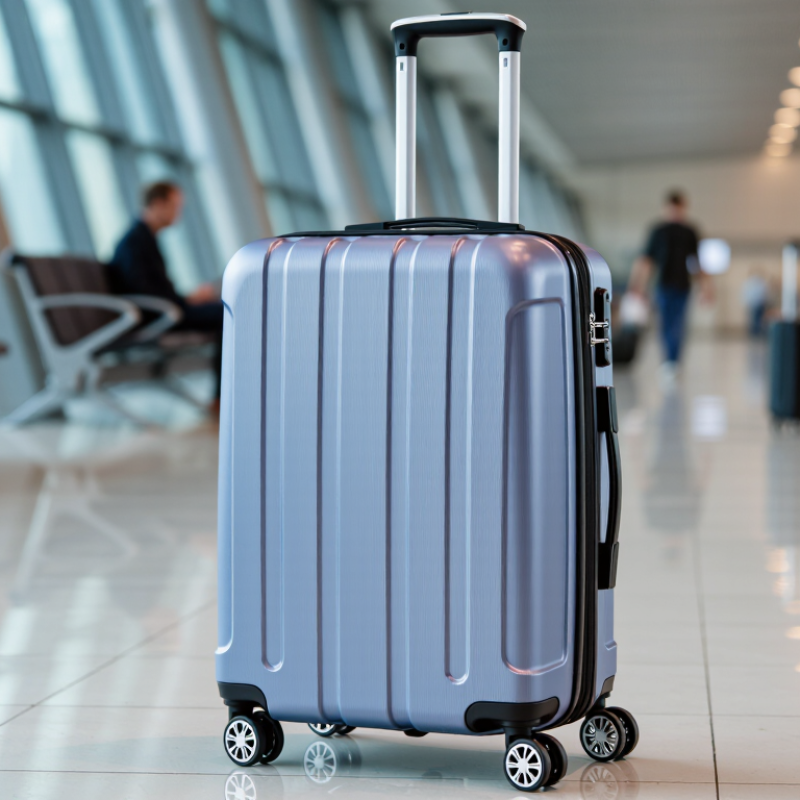
Definition and Core Features of a Trolley Suitcase Bag
A trolley suitcase bag is wheeled luggage designed for organized travel and easier movement. It usually combines a structured suitcase body with a retractable handle, allowing the user to pull it across floors, platforms, and hotel corridors. Its main purpose is simple: carry personal belongings while reducing the strain of lifting. The term “trolley” refers to the rolling system, not a specific material or shape.
Core features include two or four wheels, a telescoping handle, secure closures, and separate storage compartments. Four-wheel designs often move smoothly in crowded spaces, while two-wheel models can handle uneven pavement more effectively. A rigid shell offers stronger protection against pressure, but a soft-sided body may provide more flexibility. Interior straps, zippered sections, and a divider help prevent clothing from shifting during transit.
Size and weight also matter. A larger case holds more, yet it can become difficult to lift into a vehicle or overhead compartment. Carry-on limits vary by transport provider, so checking current requirements is practical. In daily use, wheel quality deserves attention; small wheels may struggle on rough ground. I have also found that a perfectly smooth handle is not guaranteed to remain smooth after heavy use. No design is flawless. A reliable trolley suitcase bag balances mobility, protection, organization, and manageable weight for the traveler’s actual needs.

Main Parts and How They Work Together
What Is a Trolley Suitcase Bag?
Main Parts and How They Work Together
A trolley suitcase bag combines a protective case, rolling wheels, and a pull handle. Its frame supports the shell and keeps the bag stable while moving. The telescopic handle slides through guides and locks at different heights. A strong locking button matters because a loose handle makes steering awkward.
The wheels carry most of the load. Their housings connect to the bottom frame, while bearings help them turn smoothly. Two-wheel designs roll well over uneven ground, but they require more tilting. Four-wheel designs move upright and change direction easily on smooth floors. That convenience can weaken on rough pavement. I have found that wheel placement affects balance more than appearance. A crowded front pocket can pull the case forward. Internal straps, dividers, and a flat base then control shifting clothes. Reinforced corners and water-resistant zippers can reduce everyday damage. Still, no suitcase stays perfect forever.
Common Sizes, Materials, and Design Types
A trolley suitcase bag is a wheeled case designed for easier airport and street travel. Common cabin sizes measure about 20–21 inches, while medium cases usually measure 24–26 inches. Large models often reach 28–32 inches. These figures are practical categories, not universal rules. Airlines can apply different limits, especially for cabin luggage.
Polycarbonate cases are light, rigid, and resistant to sharp impacts. ABS costs less, but it may crack sooner under repeated stress. Aluminum offers strong protection, although it adds weight and can dent visibly. Softside cases commonly use polyester or nylon, giving flexible storage and external pockets. Spinner designs use four wheels for easy movement in terminals. Two-wheel cases often perform better on uneven sidewalks. Expandable cases add capacity, but overfilling can strain zippers and change the final dimensions. SITA’s 2024 Baggage IT Insights reported 6.9 mishandled bags per 1,000 passengers in 2023. That rate fell 63% from 2007, yet no suitcase design guarantees safe handling.
Tips: Measure the packed case, including wheels and handles. Choose a cabin size only after checking the current airline policy. For frequent train travel, test wheel stability on rough flooring. I prefer reinforced corners, replaceable wheels, and a simple interior layout. More compartments sound useful, but they can waste usable space. My packing tests also show a hard shell is not always better; a lighter softside case may be easier to lift repeatedly.
What Is a Trolley Suitcase Bag? - Common Sizes, Materials, and Design Types
| Category | Typical External Size | Approx. Capacity | Common Weight | Typical Materials | Design Characteristics | Best Use |
|---|---|---|---|---|---|---|
| Underseat Trolley Bag | Approximately 40 × 30 × 20 cm | 15–25 L | 1.5–2.5 kg | Ballistic nylon, polyester, or lightweight polycarbonate | Compact body, two or four wheels, front access pocket, telescopic handle | Short trips and personal-item travel |
| Cabin or Carry-On Trolley | Approximately 55 × 35 × 20–25 cm | 30–40 L | 2.0–3.5 kg | ABS, polycarbonate, polypropylene, polyester, or nylon | Designed to fit common cabin baggage limits; may include an expansion zipper | Weekend travel and short business trips |
| Medium Checked Trolley | Approximately 65–70 × 42–48 × 25–30 cm | 60–85 L | 3.0–5.0 kg | Polycarbonate, polypropylene, ABS, polyester, or nylon | Balanced storage and portability; internal compression straps are common | Trips lasting about one to two weeks |
| Large Checked Trolley | Approximately 75–82 × 48–55 × 30–35 cm | 90–125 L | 4.0–6.5 kg | Polycarbonate, polypropylene, ABS, polyester, or nylon | High storage volume, reinforced corners, large wheels, and adjustable handle | Long holidays and family travel |
| Soft-Side Trolley Bag | Available in cabin, medium, and large sizes | 20–110 L, depending on size | Usually lighter than hard-side models | Polyester, nylon, canvas, and sometimes leather trim | Flexible walls, exterior pockets, expansion panels, and easy access | Travelers who value flexibility and organized compartments |
| Hard-Shell Trolley Suitcase | Available in cabin, medium, and large sizes | 30–125 L, depending on size | Usually 2.5–6.5 kg | Polycarbonate, polypropylene, ABS, or composite plastics | Rigid protective shell, split-case opening, zipper or frame closure | Protection for fragile or structured contents |
| Two-Wheel Trolley | Commonly 50–80 cm tall | 25–100 L | Often lighter than four-wheel designs | Nylon, polyester, ABS, polypropylene, or polycarbonate | Two recessed wheels; pulled at an angle using a telescopic handle | Uneven sidewalks and longer outdoor distances |
| Four-Wheel Spinner | Commonly 55–82 cm tall | 30–125 L | Usually slightly heavier because of four wheel assemblies | Polycarbonate, polypropylene, ABS, polyester, or nylon | Four multidirectional wheels; can move upright in any direction | Airports, stations, hotels, and smooth floors |
Note: Dimensions and capacities are typical market ranges. Actual baggage limits vary by airline, route, and fare type, so travelers should check the specific carrier’s current requirements before departure.
How a Trolley Suitcase Bag Is Used for Travel
What Is a Trolley Suitcase Bag?
A trolley suitcase bag is wheeled luggage with a retractable handle. It helps travelers move clothes and personal items with less lifting. Most models include rolling wheels, a main compartment, and smaller pockets for documents or chargers. The design suits airports, train stations, hotels, and short business trips.
How a Trolley Suitcase Bag Is Used for Travel
I usually pack heavier items near the wheels. This keeps the case balanced and reduces awkward pulling. Shoes go inside a fabric bag, while folded clothing fills the middle space. A small outer pocket holds my passport, travel papers, and headphones. I keep valuable items in my personal bag instead of checked luggage.
At the airport, I pull the suitcase beside me through crowded walkways. Two-wheel models handle uneven pavement well, but four-wheel versions turn more easily indoors. That difference matters when moving between narrow seats or busy terminals. Before leaving, I check the handle lock and wheel movement. A loose handle can become frustrating quickly.
Airline size and weight rules can change, so travelers should check current requirements before packing. A suitcase may fit overhead in one aircraft but not another. I once packed too tightly and struggled with the zipper. That mistake still reminds me to leave a little space. Overpacking can also make stairs and transfers harder, even when the wheels work well.
Key Differences from Other Travel Bags
What Is a Trolley Suitcase Bag?
A trolley suitcase bag is wheeled luggage with a telescopic handle and structured compartments. Its rigid or semi-rigid shell protects folded clothing, electronics, and toiletries. Unlike a backpack, it transfers weight from your shoulders to the floor. That difference matters during long airport walks.
Key Differences from Other Travel Bags
A trolley suitcase rolls efficiently on smooth floors, but struggles on cobblestones and broken pavements. A duffel bag usually offers flexible storage, yet its soft sides provide less protection. A backpack keeps both hands free and handles stairs better. However, heavy packing can create shoulder and back pressure. A garment bag protects hanging clothes, while a trolley case suits compact, folded packing.
SITA’s 2024 Baggage IT Insights report recorded 6.9 mishandled bags per 1,000 passengers in 2023. This figure does not make checked luggage unsafe, but it supports careful packing and clear identification. A trolley suitcase with strong wheels, reinforced corners, and a dependable handle can reduce daily travel frustration. Still, “more durable” is not always true. Poor wheel alignment can make an expensive case awkward to pull.
Tips: Check wheel movement on uneven ground. Measure the case before flying. Keep medication and essential documents in your personal bag. Use packing cubes, but leave space for inspection. Test the handle with one hand before purchase.
Article Source:
Contact Us
Phone: (650) - 522-4653 (GOLF)
Fax: (650) 522-7511
Tee Time Reservations: (650) 522-4653 (GOLF)
Location
1700 Coyote Point Drive
San Mateo, CA 94401