(650) 522-4653

Top 10 Types of Country Club Supplies for Global Buyers

For global buyers, country club supplies are not simple purchasing items. They shape comfort, safety, service speed, and the club’s public image. A crisp tablecloth, quiet electric cart, or well-organized locker room can influence a member’s entire visit.

Jeff Morgan, former president and CEO of the Club Management Association of America, has expressed a useful principle: “The member experience is the product.” This idea helps buyers assess supplies beyond price. A pool towel must absorb quickly, survive repeated washing, and feel pleasant against the skin. Dining equipment should support efficient service without making the clubhouse feel industrial. Golf-course tools must also match local weather, terrain, and maintenance skills.

The following guide examines ten major types of country club supplies for international purchasing teams. It covers golf operations, clubhouse furniture, food and beverage equipment, uniforms, linens, locker-room products, pool accessories, tennis supplies, cleaning materials, and technology-related items. Each category deserves practical questions about durability, replacement parts, packaging, delivery time, and after-sales support.

No buying list is perfect. Real conditions often expose weak assumptions. A product that performs well in a dry climate may fail near the coast. A premium finish may require more maintenance than expected. Even a small shortage of towels can disrupt a busy weekend.

That is the uncomfortable part.

Reliable sourcing requires product testing, supplier verification, and clear quality standards. Buyers should also review applicable safety, environmental, and import requirements before placing orders. The strongest decisions balance member expectations, operating costs, sustainability, and long-term service reliability.
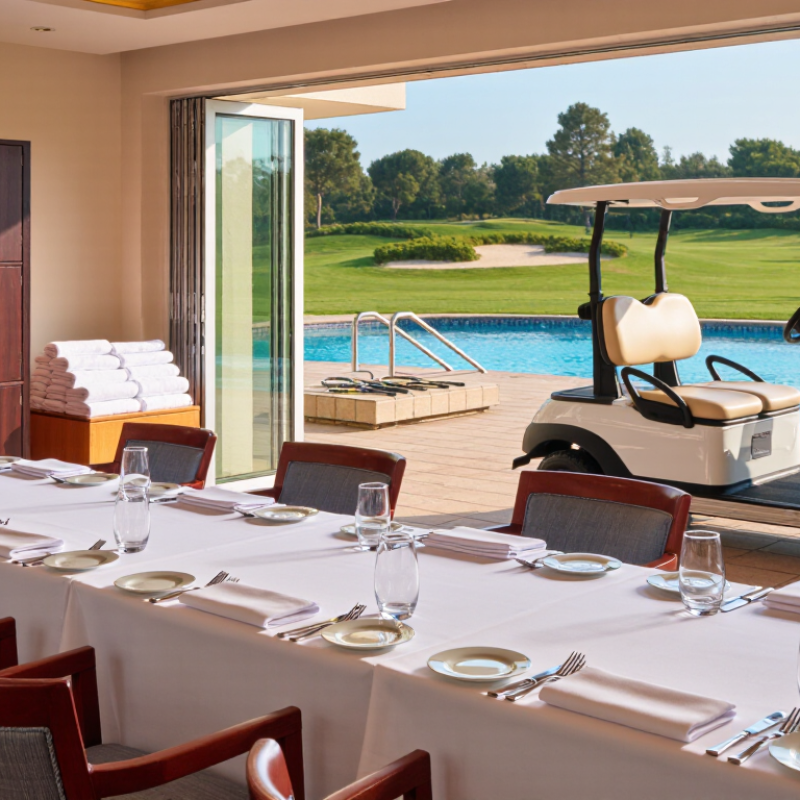
Top 10 Types of Country Club Supplies for Global Buyers

Understanding the Scope of Country Club Supplies

Country club supplies cover far more than golf equipment. They include reception furniture, dining ware, kitchen tools, uniforms, towels, lockers, cleaning products, signage, and maintenance items. Buyers should map every member touchpoint, from arrival to changing room and dining terrace. A polished lobby may need weather-resistant seating, cable management, and replacement parts. Small gaps become visible quickly. This scope is operational, not decorative.

Procurement teams often divide the top ten supply types into guest experience, facility operations, and course support. Guest experience includes furniture, tableware, linens, uniforms, and member amenities. Facility operations covers sanitation materials, storage systems, lighting accessories, and washroom fixtures. Course support includes cart accessories, practice-range items, irrigation components, and outdoor waste stations. Each category requires different specifications. Moisture resistance matters near pools. UV stability matters outdoors. Food-contact materials need appropriate safety documentation. Textile suppliers should provide composition, colorfastness, and care details.

Global buyers also need a practical approval file: dimensions, packing method, lead time, warranty terms, and replacement availability. Local electrical, fire, chemical, and import requirements can change by destination. Never treat a catalogue description as proof of compliance. Ask for test reports and clear material declarations. Attractive samples can still fail when hinges loosen or cartons arrive damp. That lesson is easy to miss. A pilot order, inspection checklist, and spare-parts plan reduce surprises, although they cannot remove every risk. Good sourcing balances appearance, service life, safety, and total operating cost.

Classifying the Top 10 Country Club Supply Types

Classifying the Top 10 Country Club Supply Types

Global buyers can classify country club supplies into ten practical groups: golf-course equipment, turf-care products, clubhouse furniture, commercial kitchenware, dining supplies, locker-room fittings, fitness equipment, pool supplies, tennis and padel equipment, and cleaning and safety products. This classification supports clearer specifications, budgeting, and supplier comparisons. Golf remains a major demand driver. The National Golf Foundation reported 47.2 million on-course golfers in the United States during 2023. The R&A also recorded more than 66 million golfers outside the United States and Mexico in its Golf Around the World 2023 report.

Each group serves a different operating area. Turf-care tools need durability and easy maintenance, while kitchen supplies require food-safe materials and stable heat performance. Locker-room benches face moisture, impact, and frequent cleaning. Fitness equipment should support varied member abilities, not only intensive training. The Global Wellness Institute valued the global wellness economy at $6.3 trillion in 2023, reinforcing demand for fitness and recovery spaces. Still, demand figures do not replace site-level inspection.

In purchasing work, I have found that pool chemicals, cleaning tools, uniforms, and safety supplies are often underestimated. They affect daily service quality. Tennis equipment also deserves separate evaluation, especially where courts operate seasonally. Specifications should cover replacement cycles, storage conditions, water resistance, and staff training. Some classifications overlap. That is the difficult part. A premium-looking item may perform poorly under constant club use, so buyers should test samples before larger orders.

Essential Supplies for Golf Courses and Outdoor Facilities

For global buyers, country club supplies should support safe play, healthy turf, and comfortable outdoor use. Ten practical categories include turf seed, soil amendments, irrigation parts, mowing equipment, aeration tools, bunker sand, course signage, safety barriers, outdoor seating, and waste containers. Each category affects daily operations.

Turf seed must suit local temperature, rainfall, and soil conditions. Irrigation controllers, valves, and filters need simple maintenance access. Sharp mower blades create cleaner cuts and reduce turf stress. Aeration tools help compacted ground recover after heavy traffic. Bunker rakes and screened sand also deserve careful specification. Small differences matter.

Outdoor facilities need durable benches, shade structures, pathway signs, and clearly marked hazard areas. Waste containers should resist rain, wind, and frequent cleaning. In my purchasing experience, buyers often focus on unit price and overlook replacement parts. That mistake becomes expensive. Check material thickness, drainage design, warranty terms, and installation requirements before ordering. Not every “all-weather” claim performs equally across humid coasts and freezing regions. Local testing is wiser.

Safety supplies should remain visible without making the course feel crowded. Non-slip surfaces, stable frames, and rounded edges reduce avoidable risks. Storage rooms need organized racks for hoses, tools, and maintenance chemicals. Labels should remain readable after sun exposure and washing. Perfect planning is impossible. Seasonal demand, shipping delays, and unfamiliar soil conditions can still disrupt a careful order.

Top 10 Types of Country Club Supplies for Global Buyers

Essential supply categories for golf courses, clubhouses, landscaping teams, and outdoor recreation facilities. The index reflects typical procurement importance for an 18-hole golf facility, based on operational frequency, replacement needs, and safety requirements.

How to read the chart: Higher scores indicate categories that generally require more frequent purchasing, broader inventory coverage, or greater operational importance. Actual requirements vary by climate, facility size, and maintenance standards.

Supplies for Hospitality, Dining, Sports, and Member Services

Top 10 Types of Country Club Supplies for Global Buyers

Supplies for Hospitality, Dining, Sports, and Member Services

Country clubs depend on coordinated supplies across daily operations. For global buyers, the right selection supports comfort, safety, and consistent service. Hospitality areas need banquet tables, stackable chairs, linens, glassware, serving trays, and guest-room accessories. Durable materials matter when staff move equipment repeatedly. Small details matter.

Dining operations require food-contact utensils, insulated containers, kitchen storage, beverage dispensers, and cleaning tools. Buyers should check material specifications, temperature limits, packaging quality, and relevant local requirements. A beautiful serving set may still fail during busy outdoor events. We have seen this happen when heat resistance was assumed rather than verified.

Sports supplies include golf practice equipment, court accessories, fitness tools, locker-room benches, towels, and hydration stations. Weather-resistant storage helps protect equipment near pools or open fields. Member services also need reception organizers, queue barriers, access cards, directional signs, and event supplies. Clear signage reduces confusion during tournaments and private functions. Accessible design should be considered from the beginning, not added later. Samples, test reports, and supplier audits improve purchasing confidence. Yet paperwork alone cannot show how a trolley handles on uneven paving. Practical trials remain valuable, even when schedules are tight.

Top 10 Types of Country Club Supplies for Global Buyers - Supplies for Hospitality, Dining, Sports, and Member Services
No. Supply Type Primary Area Typical Products Important Specifications Key Buying Considerations
1 Tableware and Dining Service Supplies Dining Hospitality Plates, bowls, serving platters, flatware, drinking glasses, coffee cups, trays, and table accessories. Food-safe materials; resistance to chipping, staining, thermal shock, and repeated commercial dishwashing. Common materials include porcelain, vitrified ceramic, stainless steel, tempered glass, and polycarbonate. Choose coordinated collections, stackable shapes, replacement availability, breakage rates, carton protection, and compliance with food-contact regulations in the destination market.
2 Commercial Kitchen Equipment Food Service Back of House Convection ovens, induction ranges, refrigeration units, food processors, mixers, ice machines, worktables, and dishwashing equipment. Stainless-steel construction; electrical voltage and frequency compatibility; temperature control; ventilation requirements; water and drainage connections; sanitation certification. Confirm local utility standards, installation space, service access, spare parts, energy consumption, warranty terms, and operator training before ordering.
3 Golf Course and Practice Equipment Golf Operations Recreation Flagsticks, golf cups, course markers, tee markers, ball baskets, practice mats, range baskets, ball washers, and maintenance accessories. Weather-resistant materials; UV stability; suitable dimensions for the course layout; high-visibility colors; turf-friendly bases; compatibility with standard golf-course fittings. Evaluate climate exposure, storage requirements, replacement frequency, delivery to remote locations, and compatibility with existing course-maintenance procedures.
4 Tennis, Pickleball, and Court-Sports Supplies Sports Member Activities Nets, posts, court dividers, balls, paddles, racquets, scoreboards, ball carts, benches, and court-maintenance tools. Stable net tension; corrosion-resistant posts; weather-resistant fabrics; approved court dimensions; durable grips; consistent ball performance; safe anchoring systems. Match products to court type and local weather conditions. Prioritize safety, easy setup, storage efficiency, replacement parts, and equipment suitable for beginner and advanced members.
5 Fitness and Wellness Equipment Fitness Wellness Treadmills, exercise bikes, cross-trainers, strength machines, free weights, yoga mats, lockers, foam rollers, and stretching accessories. Commercial-duty frames; user-weight ratings; safety stops; adjustable resistance; impact-absorbing flooring; noise control; electrical compatibility; cleaning-resistant surfaces. Consider member usage levels, floor loading, room layout, accessibility, preventive maintenance, user instruction, ventilation, and availability of local technical support.
6 Uniforms and Staff Apparel Staff Services Guest Experience Polos, shirts, trousers, skirts, jackets, aprons, chef wear, golf-service apparel, caps, name badges, and weather-protective garments. Colorfast fabrics; breathable or moisture-wicking materials; durable stitching; comfortable sizing; easy-care washing; seasonal layering; appropriate safety features for kitchen and maintenance roles. Request size ranges, measurement charts, fabric samples, wash-test results, color consistency, reorder flexibility, minimum order quantities, and packaging suitable for international transport.
7 Guest Room and Locker Room Supplies Lodging Changing Facilities Towels, bath mats, robes, hangers, lockers, laundry bags, toiletry dispensers, shower curtains, hair dryers, and garment storage accessories. Absorbent, colorfast textiles; durable locker hardware; moisture-resistant finishes; secure hinges and locks; easy-clean surfaces; slip-resistant bath mats. Assess laundering capacity, textile weight, replacement cycles, humidity, ventilation, accessibility, locker dimensions, privacy requirements, and packaging volume.
8 Outdoor Furniture and Poolside Accessories Outdoor Areas Leisure Dining tables, chairs, loungers, umbrellas, cushions, cabanas, outdoor serving carts, towel stands, and poolside waste bins. UV-resistant and corrosion-resistant construction; quick-drying fabrics; stable bases; wind ratings for umbrellas; water-resistant cushions; safe edges and easy-clean surfaces. Match materials to coastal, tropical, cold, or high-wind environments. Review stacking capacity, storage footprint, anchoring, drainage, fire performance, and seasonal maintenance.
9 Cleaning, Sanitation, and Waste-Handling Supplies Facility Operations Hygiene Cleaning carts, microfiber cloths, mops, brooms, dispensers, sanitizing stations, gloves, liners, recycling bins, and floor-care equipment. Compatible chemical resistance; color-coded cleaning systems; ergonomic handles; leak-resistant containers; sealed waste bins; durable wheels; clear dilution and safety labeling. Confirm chemical regulations, staff safety requirements, waste-separation practices, replacement consumables, storage conditions, and training needs for proper handling.
10 Member Service and Front-Desk Supplies Administration Member Relations Check-in counters, queue barriers, membership card holders, key cabinets, receipt printers, document folders, signage stands, registration forms, and meeting-room accessories. Durable high-use surfaces; clear visual communication; secure storage; accessible counter heights; compatible paper sizes; multilingual labeling; organized cable management. Prioritize smooth member flow, data privacy, accessibility, integration with existing systems, easy replenishment of consumables, and consistent signage across club facilities.

Global Buying Standards for Quality, Compliance, and Logistics

Top 10 Types of Country Club Supplies for Global Buyers

Global buyers usually source turf-care machinery, irrigation parts, maintenance tools, clubhouse furniture, kitchenware, uniforms, linens, cleaning equipment, safety supplies, and event signage. Quality begins with measurable specifications. Buyers should request material grades, load limits, water-efficiency data, electrical test records, and replacement-part availability. The ISO Survey 2023 recorded about 1.26 million valid ISO 9001 certificates worldwide. Certification helps, but it does not replace factory audits or sample testing.

Compliance must match the destination market. Food-contact declarations, textile composition labels, chemical safety documents, and electrical conformity records should travel with each shipment. Ask for batch numbers and traceability. Keep records. A missing certificate can delay customs clearance or internal approval. Requirements also differ between countries, and translated documents may be necessary. This is where inexperienced purchasing teams often underestimate risk.

Logistics deserves equal attention. UNCTAD’s Review of Maritime Transport 2024 states that more than 80 percent of global merchandise trade by volume moves by sea. Bulky furniture and irrigation equipment need stronger cartons, moisture barriers, and verified container loading plans. Smaller supplies may benefit from consolidated shipments. Check pallet dimensions before ordering. Otherwise, freight savings can disappear through inefficient space usage. The World Bank’s Logistics Performance Index 2023 evaluates customs, infrastructure, shipment quality, and timeliness, offering a useful comparison for sourcing routes. A perfect checklist does not exist. Our own purchasing reviews still find overlooked packaging damage and unclear warranty terms. That is a practical weakness worth correcting.

Contact Us

Phone: (650) - 522-4653 (GOLF)

Fax: (650) 522-7511

Tee Time Reservations: (650) 522-4653 (GOLF)

Location

1700 Coyote Point Drive

San Mateo, CA 94401