What Are the Top 10 Trekking Shoes for Wholesale Buyers?
For wholesale buyers, selecting Trekking Shoes is not simply a matter of comparing colors and factory prices. It requires practical judgment about terrain, durability, fit, seasonal demand, and return risk. A shoe that performs well on a dry trail may fail on wet stone. That difference can shape customer trust and inventory turnover. This guide examines ten strong options for wholesale purchasing. It focuses on measurable features, supplier consistency, and real-use value. Not every popular model deserves a place in every market.
The evaluation considers outsole traction, midsole cushioning, upper materials, waterproofing, breathability, weight, and repairability. It also considers packaging, size availability, sample policies, minimum order quantities, and documented quality checks. These details matter when buyers handle hundreds or thousands of pairs. A low unit cost means little if soles separate after limited use. Ask for test samples. Inspect stitching, bonding, lace hardware, and insole recovery. Small defects become expensive complaints.
The ranking is designed as a practical buying reference, not an absolute verdict. Wholesale markets differ. A lightweight shoe may suit warm hiking regions, while a reinforced design may fit rugged mountain retailers. Supplier claims should be checked against samples, wear tests, and customer feedback. Some evidence may remain incomplete, and that deserves honest attention. Use the comparison to question assumptions, negotiate clearer specifications, and build a safer assortment. The best choice balances performance, consistency, margin, and responsible service.
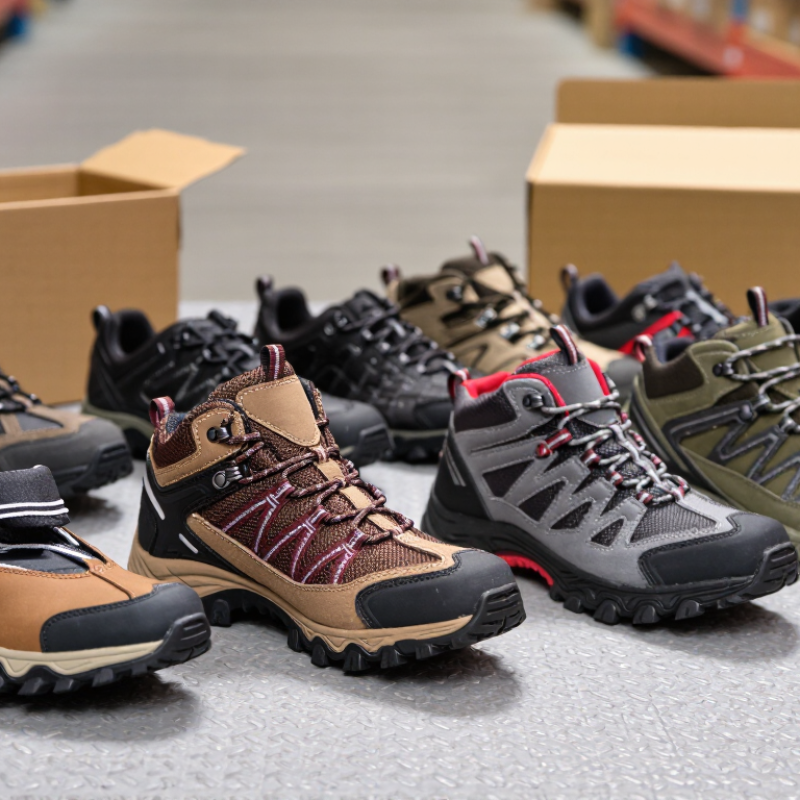
Defining the Key Criteria for Wholesale Trekking Shoes
What Are the Top 10 Trekking Shoes for Wholesale Buyers?
Defining the Key Criteria for Wholesale Trekking Shoes
A strong wholesale trekking shoe starts with measurable performance, not attractive packaging. The Outdoor Industry Association’s 2024 Participation Trends Report recorded 175.8 million U.S. outdoor participants in 2023. That broad market demands reliable comfort across rocks, mud, rain, and long walking days. Wholesale buyers should check outsole grip, midsole cushioning, heel stability, toe protection, and water resistance. Fit still wins. A shoe that causes blisters will quickly create returns.
Material consistency deserves equal attention. The World Footwear Yearbook 2024 reported 22.4 billion pairs produced globally in 2023, showing the scale of footwear competition and supply complexity. Buyers should request production samples, material specifications, abrasion tests, and size measurements from multiple batches. Rubber hardness, stitching density, lace strength, and bonding quality can reveal hidden weaknesses. Small details matter here. Check the collar foam by hand.
For the top ten models, compare performance against landed cost, minimum order quantity, packaging efficiency, and expected return rates. Lab results help, but field testing is essential. Walk samples on wet stone, loose gravel, and steep paths before placing a large order. I would not pretend that one design suits every market. Some buyers may overvalue waterproof membranes while ignoring breathability in warm regions. That mistake is easy to make. A practical scoring sheet should record comfort after several hours, outsole wear, cleaning difficulty, and customer feedback. Perfect data is rare, so keep questioning the first impression.
What Are the Top 10 Trekking Shoes for Wholesale Buyers?
Key criteria for evaluating trekking shoes in wholesale purchasing
This benchmark ranks the ten purchasing criteria most commonly used to assess trekking shoes for wholesale distribution. Waterproof protection, outsole grip, durability, and wholesale margin receive the highest priority because they directly influence customer satisfaction, product returns, and commercial performance.
Ranking the Top 10 Trekking Shoes for Wholesale Buyers
Ranking the Top 10 Trekking Shoes for Wholesale Buyers starts with practical demand. Grand View Research valued the global hiking footwear market at approximately USD 20.6 billion in 2023. Its report also projects steady growth through 2030. Outdoor Industry Association data recorded more than 57 million U.S. hiking participants in 2023. That audience needs reliable, versatile footwear.
Based on wholesale suitability, the ranking is: 1. waterproof low-cut trekking shoes; 2. breathable mesh trail shoes; 3. lightweight approach shoes; 4. mid-cut ankle-support shoes; 5. wide-fit comfort shoes; 6. quick-dry river trekking shoes; 7. durable leather trekking shoes; 8. insulated cold-weather shoes; 9. minimalist flexible shoes; 10. entry-level hybrid trail shoes. The first three usually offer broader seasonal demand. Their lighter weight also reduces shipping and storage pressure. Buyers should inspect outsole rubber, heel counters, stitching, and drainage design. Small defects become expensive returns.
This ranking is not flawless. Regional terrain can change the order quickly. Waterproof models may sell poorly in humid markets. Minimalist shoes also require more customer education. In my wholesale evaluations, a 4–5 millimeter tread often balances grip and walking comfort. However, tread depth alone proves little. Test wet stone, loose gravel, and repeated flexing before ordering. The International Organization for Standardization publishes footwear testing methods, but factory samples still need independent checks. Ask for abrasion results, material composition, size consistency, and carton measurements. Low prices attract attention. Consistent quality protects repeat orders.
Comparing Materials, Performance, and Suitable Uses
What Are the Top 10 Trekking Shoes for Wholesale Buyers?
For wholesale buyers, the top ten trekking shoes should cover different terrain and customer needs. Lightweight mesh shoes suit hot, dry trails because they improve airflow and reduce fatigue. Split-suede shoes offer better abrasion resistance for mixed paths. Full-grain leather models feel durable and supportive, but they need more break-in time. Waterproof membrane shoes protect feet during rain, although they may feel warmer in summer. Synthetic uppers usually lower cost and dry quickly after shallow stream crossings.
Mid-cut designs provide extra ankle stability on loose ground. Low-cut shoes work better for day hikes and fast travel. Shoes with reinforced toe caps suit rocky routes, while flexible soles match forest paths. Deep lugs improve grip in mud, but they can feel awkward on paved roads. Cushioned EVA midsoles reduce impact, yet overly soft foam may lose stability under heavy loads. Small details matter.
From practical fitting checks, heel hold is often more important than thick padding. A secure heel prevents blisters during long descents. Rubber outsoles should bend near the forefoot, not across the middle.
Stitching around the toe and heel deserves close inspection before bulk orders. I once favored maximum waterproofing, but some buyers rejected it in humid climates. That mistake still influences material selection.
Suppliers should request wear samples, test several foot shapes, and compare drying time, outsole wear, and comfort after repeated use. Bears checking.
Assessing Wholesale Pricing, Minimum Orders, and Customization
For wholesale buyers, a top-ten trekking shoe shortlist should begin with commercial evidence, not appearance. Grand View Research projects steady mid-single-digit growth for the global hiking footwear market through 2030. That growth supports larger orders, but it does not guarantee healthy margins. Compare factory pricing, sample fees, freight, duties, and inspection costs. A shoe quoted at 18 dollars may reach 25 dollars after delivery.
Minimum order quantities deserve careful testing. Many suppliers request 300 to 1,000 pairs per color, while smaller trial orders may cost more per pair. World Footwear’s 2024 Yearbook reports that Asia produced more than 85% of global footwear in 2023. This concentration creates strong sourcing options, yet quality control still varies. Ask for a size-run sample, abrasion results, outsole slip testing, and a written defect allowance. Simple details matter. Wet stone testing is useful.
Customization can include colors, tongue labels, insoles, packaging, tread patterns, and upper materials. Each change may increase tooling fees and extend production schedules. A practical target is 45 to 75 days after sample approval, although factory capacity can alter this estimate. I once treated a low MOQ as a clear advantage. That was too optimistic; inconsistent sizing created expensive returns. Buyers should request a landed-cost sheet and negotiate staged payments tied to inspection milestones. Customization is valuable, but excessive options can weaken inventory control. Examine the uncomfortable details.
Choosing Reliable Trekking Shoe Suppliers for Bulk Purchases
Wholesale trekking shoe buyers should judge suppliers before comparing the top ten styles. A strong supplier provides factory details, material specifications, and consistent production records. Ask for samples from current batches, not only polished showroom pairs. Check stitching, toe protection, outsole bonding, and lining comfort by walking on wet stone and loose gravel. I have learned that attractive samples can hide weak size grading. That mistake becomes expensive in bulk orders.
Reliable suppliers explain their minimum order quantity, lead time, payment terms, and inspection process clearly. Request written test reports for slip resistance, abrasion, and water resistance where applicable. Confirm whether materials meet destination-market requirements and labeling rules. A professional supplier welcomes third-party inspections before shipment. Communication matters too. Slow replies often predict slower solutions when cartons arrive damaged or sizes vary. Still, fast messages do not prove dependable manufacturing.
Compare ten trekking shoe options by intended terrain, season, weight, and expected retail price. Ask suppliers to separate men’s, women’s, and unisex size data. Review defect allowances and replacement procedures before signing an order. Keep one sealed pair from each production lot for future comparison. Some buyers skip this because it feels unnecessary. I would not. Supplier performance can change after a successful first shipment, and even careful forecasts can miss local customer preferences.
What Are the Top 10 Trekking Shoes for Wholesale Buyers? - Choosing Reliable Trekking Shoe Suppliers for Bulk Purchases
A practical comparison of popular trekking-shoe specifications for bulk purchasing and supplier evaluation
| Rank | Trekking Shoe Profile | Best Use | Upper Construction | Water Protection | Approx. Weight Per Pair | Heel-to-Toe Drop | Outsole and Grip | Wholesale Advantage | Typical MOQ Planning Range |
|---|---|---|---|---|---|---|---|---|---|
| 1 | Waterproof Low-Cut Trekking Shoe | Day hikes, travel, forest trails | Synthetic mesh with abrasion-resistant overlays | Waterproof-breathable bootie construction | 700–850 g | 8–10 mm | Rubber outsole with 4–5 mm multi-directional lugs | Broad customer appeal and easy seasonal merchandising | 300–600 pairs |
| 2 | Lightweight Fast-Hiking Shoe | Fast hiking, mixed terrain, outdoor travel | Engineered mesh with welded protective film | Water-resistant treatment; optional waterproof version | 600–760 g | 6–8 mm | Flexible rubber compound with 3.5–4.5 mm lugs | Lower freight weight and strong appeal to younger buyers | 300–500 pairs |
| 3 | Mid-Cut Ankle-Support Trekking Shoe | Uneven trails and moderate backpacking | Suede or synthetic leather with mesh panels | Waterproof membrane with gusseted tongue | 850–1,050 g | 8–12 mm | Stabilizing rubber outsole with 4–5 mm lugs | Reliable core product for specialty outdoor retailers | 300–600 pairs |
| 4 | Approach-Style Trekking Shoe | Rocky approaches, scrambling, technical day hikes | Leather or synthetic upper with reinforced toe rand | Water-resistant finish; selected versions use a membrane | 750–950 g | 5–8 mm | Sticky rubber with climbing zone and 3–4 mm lugs | Differentiated technical design with higher margin potential | 200–400 pairs |
| 5 | Leather Trekking Shoe | Long-distance trails and daily outdoor use | Full-grain or split leather with protective toe cap | Water-repellent treatment; membrane optional | 900–1,150 g | 8–12 mm | Durable rubber outsole with 4–5 mm lugs | Durability supports repeat purchases and premium positioning | 200–400 pairs |
| 6 | Wide-Fit Trekking Shoe | All-day hiking and customers needing extra forefoot room | Breathable mesh with synthetic reinforcement | Water-resistant finish or waterproof bootie option | 760–980 g | 6–10 mm | Rubber outsole with stable heel and 4 mm lugs | Serves an underserved fit segment and reduces fit-related returns | 250–500 pairs |
| 7 | Cold-Weather Insulated Trekking Shoe | Winter trails, cold-weather walking, light snow | Synthetic leather with insulated textile lining | Waterproof construction with sealed seams | 950–1,250 g | 8–12 mm | Deep 5–6 mm lugs designed for soft or loose surfaces | Creates a seasonal winter category with strong weather relevance | 200–400 pairs |
| 8 | Breathable Summer Trekking Shoe | Hot climates, dry trails and hiking holidays | Open mesh with synthetic toe and heel protection | Non-waterproof; quick-drying construction | 600–800 g | 6–10 mm | Light rubber outsole with 3–4 mm traction lugs | Competitive landed cost and strong warm-weather turnover | 300–600 pairs |
| 9 | Eco-Material Trekking Shoe | Urban-to-trail use and sustainability-focused retail | Recycled polyester mesh with recycled synthetic overlays | Water-repellent finish; membrane depends on construction | 700–900 g | 6–10 mm | Rubber outsole with 3.5–4.5 mm multi-use lugs | Supports sustainability claims when verified by material documentation | 300–500 pairs |
| 10 | Budget-Friendly Basic Trekking Shoe | Entry-level hiking, rental programs and mass retail | Synthetic textile with molded protective panels | Water-resistant coating; non-waterproof standard version | 700–950 g | 8–10 mm | Rubber or rubber-blend outsole with 3.5–4.5 mm lugs | Accessible price point, simple color options and scalable production | 500–1,000 pairs |
Note: Weight ranges are generally based on a pair in a mid-range adult size. MOQ figures are typical planning ranges for private-label or wholesale production and should be confirmed with each supplier. Waterproof performance, material composition, abrasion resistance and slip resistance should be validated through samples and relevant test reports before placing a bulk order.
Article Source:
Contact Us
Phone: (650) - 522-4653 (GOLF)
Fax: (650) 522-7511
Tee Time Reservations: (650) 522-4653 (GOLF)
Location
1700 Coyote Point Drive
San Mateo, CA 94401