Top Team Kits for Every Sport and Budget
Choosing Team Kits means balancing comfort, durability, appearance, and cost. A bright design may look sharp online, but rough seams or tight sleeves can distract players during a match. Fit comes first. Consider the sport, local weather, and how often the kit will be worn. Lightweight, breathable fabric can help during hot training sessions, while a warmer layer may suit outdoor play in cooler conditions. Check size charts carefully, especially when ordering for a mixed-age squad. Sizes can vary between brands, so one sample garment may be worth testing before a large order.
Budget matters, but the lowest price is not always the best value. Compare fabric weight, stitching, printing methods, and washing instructions alongside the listed cost. A shirt that holds its shape through repeated washes may serve a team longer than a cheaper option that fades quickly. Details matter. Look for practical extras, such as secure pockets where the sport allows them, clear player numbers, and colors that remain easy to distinguish on the field or court. No kit is perfect. Teams may need to compromise between customization, delivery time, and price, and those choices deserve a second look. This guide explores options for different sports and budgets, with attention to everyday comfort and sensible buying decisions. Before placing an order, confirm current sport-specific requirements with the relevant league or organizer.
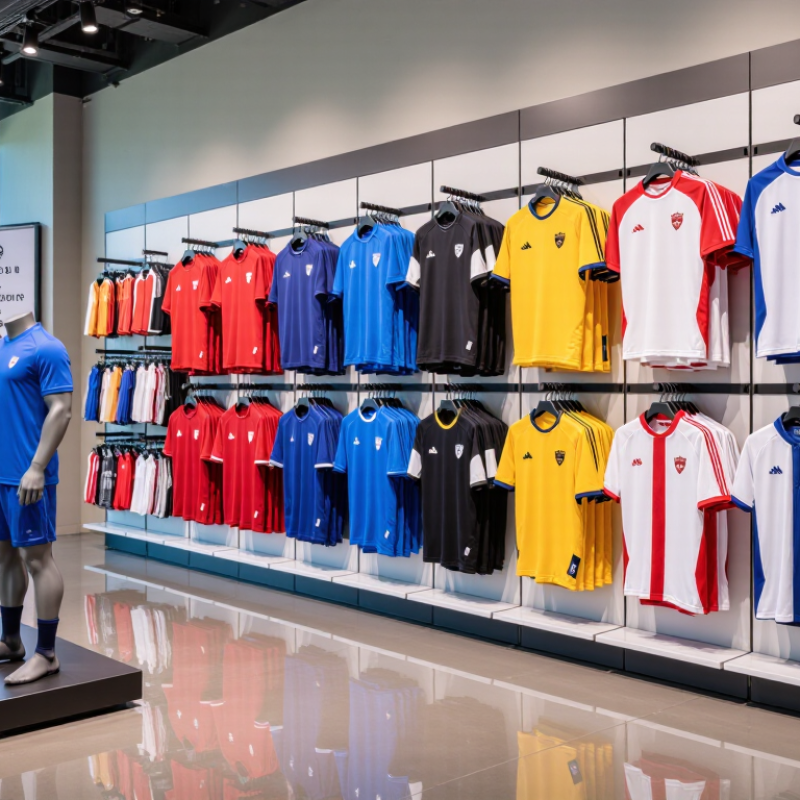
Team Kits Defined: Jerseys, Shorts, Socks, and Essential Accessories
A team kit is more than a jersey. It is a working set: shirt, shorts, socks, and small accessories that stay comfortable through warm-ups and match play. The Sports & Fitness Industry Association’s 2024 Topline Participation Report counted 242.4 million U.S. participants in sports and fitness activities during 2023. That scale makes fit and durability practical concerns, not minor details. A jersey should allow shoulder movement without flapping; shorts should sit securely when players sprint or defend. Test both while moving, not just while standing still.
Socks deserve equal attention. Choose a thickness that works with the team’s usual footwear, and check that the cuff stays up without squeezing. Simple accessories can solve specific problems: a captain’s armband, spare laces, or a lightweight training layer. More items do not always mean a better kit. Sometimes, they add clutter.
Material choices matter, too. Textile Exchange’s Materials Market Report 2024 estimates that polyester made up 57% of global fiber production in 2023. That figure describes the wider textile market, not teamwear alone, but it helps explain why synthetic fabrics are common. Compare fabric weight, seam construction, and care instructions; a low price can hide weak stitching. One detail is easy to miss: teams often order before trying a full size range. Leave room for fit checks, and revise the order if the first sample feels restrictive.

Market Scale: Grand View Research Reports $203.3B in 2023 and 6.7% CAGR
Team kits sit within a large, expanding market. Grand View Research valued the global sports apparel market at $203.3 billion in 2023 and projected a 6.7% compound annual growth rate from 2024 to 2030. That figure covers far more than uniforms, but it signals strong demand for clothing built around sport and activity. Scale matters. The Sports & Fitness Industry Association’s 2024 Topline Participation Report counted 242.1 million Americans in at least one sport or fitness activity in 2023. More participants mean varied needs, from breathable practice shirts to durable match-day sets.
For a school team on a tight budget, prioritize fit, fabric weight, and easy replacement. A lightweight shirt that dries quickly can feel noticeably better during a humid afternoon practice. For colder conditions, a simple layering option may matter more than decorative details. Teams with larger budgets can consider tougher seams, consistent sizing, and spare pieces for late roster changes. Still, higher cost does not guarantee longer wear. Wash routines, field surfaces, and frequency of use all affect durability. This is easy to overlook. Market forecasts describe broad trends, not what one team should buy; even a sensible checklist can miss local weather or laundry limits.
Global Sports Apparel Market: 2023–2030
Market value in USD billions
The market was valued at $203.3 billion in 2023. The 2024–2030 figures are estimates calculated by applying the reported 6.7% compound annual growth rate; they are not independently reported annual results.
Sport-Specific Needs: How Football, Basketball, and Rugby Shape Kit Design
Team kits work best when they answer the sport’s physical demands, not just its color scheme. Fit, fabric, and reinforcement affect movement, comfort, and replacement costs. Compare garment weight, seam placement, and care instructions with typical training conditions. Small details matter.
For football, shirts should allow shoulder movement and manage sweat during repeated sprints. Durable shorts and secure socks also matter on wet pitches.
Basketball kits often use sleeveless tops and lightweight fabrics, giving players room to reach and jump. Check that shorts stay comfortable through deep bends and quick changes of direction.
Rugby places greater strain on seams and fabric during contact. A closer-fitting jersey may reduce loose material, but it should not restrict breathing or movement. Fit is personal.
Budget decisions involve trade-offs. A team training several times weekly may benefit from sturdy stitching and fabric that tolerates frequent washing. For occasional play, simpler materials can be reasonable. Compare care labels and check seams after washing; a low price alone says little about lifespan. There is no perfect cut for every player, and team sizing can still be awkward. That deserves a second fitting.
Materials and Fit: Comparing Breathability, Durability, and Performance
A kit’s fabric and cut affect comfort long before the final whistle. Polyester is common, but fiber choice alone cannot tell you how well a garment will breathe. Textile Exchange’s 2024 Materials Market Report estimates global fiber production reached 124 million tonnes in 2023, with polyester accounting for 57 percent. That is a supply statistic, not proof of better athletic performance. Look for fabric details and test results, not just fiber names.
Air permeability testing, such as ASTM D737, measures how readily air passes through fabric. AATCC TM195 assesses liquid moisture management, including how fabric handles sweat. These tests offer useful comparisons, though real comfort also depends on humidity, exertion, and garment construction. Fit matters just as much: a tight sleeve can restrict a throwing motion, while loose fabric may snag or shift during a sprint. Small detail, big effect. In practice, move, reach, and squat in a kit before buying. Check seams under the arms and waistbands while moving. I would not treat a soft hand as proof of durability; that judgment can be wrong. Better evidence includes abrasion or tensile testing, plus stitching that holds after repeated washing. Not always. A breathable fabric can still feel clammy if its fit traps heat.
Budget Tiers: Weighing Customization, Bulk Pricing, and Replacement Costs
Budget tiers should compare the full cost of a kit, not just its first invoice. Entry-level packages often use standard colors and limited personalization, keeping setup simple. Custom names, numbers, and specialty fabrics can raise unit prices or add one-time artwork fees. Ask whether those fees apply again to replacement orders. They sometimes do.
Bulk pricing helps when rosters are stable, but a large order can leave a team with unused sizes. The NFHS reported 8,062,302 high-school sports participants in 2023–24, a reminder that team demand can be substantial and varied. That national figure is not a forecast for any single club. This is easy to underestimate. Compare price breaks against actual roster counts, then keep a small reserve of common sizes for late additions. The U.S. EPA estimated that 17 million tons of textiles entered the municipal waste stream in 2018; that figure covers all textiles, not uniforms. Still, it makes durability and repair worth considering. A slightly higher-cost kit may be sensible if seams, numbers, and fabric hold up through repeated washing. Before ordering, check replacement lead times, minimum quantities, and whether colors stay consistent across production runs. A cheap first order can become costly when one missing shirt requires a full reorder.
Top Team Kits for Every Sport and Budget - Budget Tiers: Weighing Customization, Bulk Pricing, and Replacement Costs
Estimated U.S. prices per athlete in USD for a 25–49 player order. Kits are apparel-only and exclude footwear, protective equipment, shipping, and taxes. Actual quotes vary by garment fabric, decoration method, order size, and supplier.
| Sport | Typical Apparel Kit | Value Tier Estimated per kit | Midrange Tier Estimated per kit | Premium Tier Estimated per kit | Customization and Bulk Pricing | Typical Single-Player Replacement Cost |
|---|---|---|---|---|---|---|
| Soccer | Jersey, shorts, and socks | $25–$40 | $40–$65 | $65–$100 | Names and numbers commonly add about $5–$15 per kit. Larger orders may reduce unit prices by roughly 5–15%, depending on decoration and quantity. | $15–$35 for a replacement jersey; about $25–$45 for a jersey, shorts, and socks set. |
| Basketball | Reversible or single-layer jersey and shorts | $30–$45 | $45–$75 | $75–$120 | Printed numbers are often included in team orders; names or extra design details can add about $5–$15 per kit. Orders of 50 or more may qualify for additional price breaks. | $20–$45 for a jersey; about $30–$60 for a jersey and shorts set. |
| Baseball / Softball | Jersey, pants, and cap; socks may be included | $45–$70 | $70–$115 | $115–$180 | Player names, numbers, and stitched details can add about $10–$30 per kit. Bulk savings are often smaller when orders include multiple garment styles or more complex stitching. | $25–$60 for a replacement jersey; about $40–$90 for a jersey, pants, and cap set. |
| Volleyball | Jersey and shorts; knee pads are usually separate | $25–$40 | $40–$65 | $65–$105 | Names and numbers generally add about $5–$15 per kit. Ordering a full roster at once can lower unit cost, while a small replacement order may be priced higher per item. | $15–$35 for a replacement jersey; about $25–$50 for a jersey and shorts set. |
| Flag Football | Jersey and shorts; flags or belts may be separate | $25–$40 | $40–$65 | $65–$100 | Printed numbers and team graphics may add about $5–$15 per kit. For orders of 50 or more, basic printed designs are often more cost-effective per player than individual customization. | $15–$35 for a replacement jersey; about $25–$50 for a jersey and shorts set. |
| Track / Running | Singlet or short-sleeve top and running shorts | $25–$40 | $40–$70 | $70–$115 | Team names and simple numbers may add about $5–$15 per kit. Technical fabrics and specialty printing usually account for most of the price difference between tiers. | $15–$40 for a replacement top; about $25–$55 for a top and shorts set. |
Article Source:
Contact Us
Phone: (650) - 522-4653 (GOLF)
Fax: (650) 522-7511
Tee Time Reservations: (650) 522-4653 (GOLF)
Location
1700 Coyote Point Drive
San Mateo, CA 94401