How to Play a Par 3 Golf Course Like a Pro and Improve Your Short Game
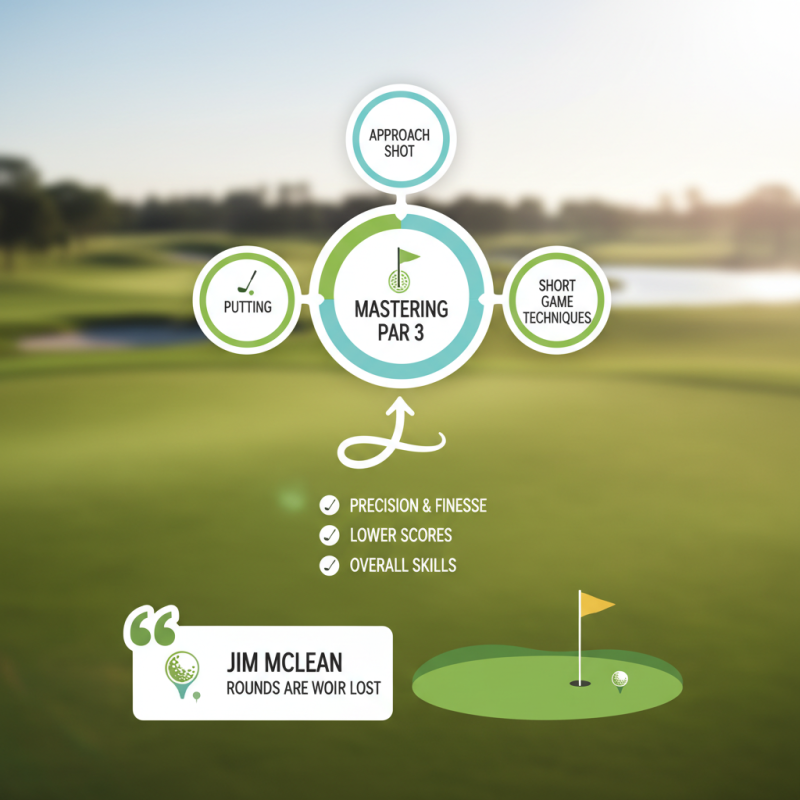
Playing a par 3 golf course can be an enjoyable yet challenging experience, especially for those looking to refine their short game. Renowned golf instructor Jim McLean emphasizes the importance of mastering this aspect when he states, "On a par 3 golf course, your short game is your best friend; it’s where rounds are won or lost." This sentiment holds true for both beginners and seasoned golfers aiming to lower their scores and enhance their overall golfing skills.
A par 3 golf course typically consists of holes that measure less than 200 yards, requiring precision and finesse rather than raw power. This unique format allows players to focus on their approach shots, putting, and other short game techniques essential for success. By adopting the right strategies and honing their skills on these shorter holes, golfers can significantly improve their performance on more challenging courses as well.
In this guide, we will explore practical tips and techniques that can help you navigate a par 3 golf course like a pro. Whether you are looking to perfect your wedge game or develop a reliable putting routine, our insights will provide the tools necessary to elevate your play and boost your confidence on the greens. Join us as we unlock the secrets to mastering the art of short game on par 3 courses.
Understanding the Layout and Challenges of a Par 3 Golf Course
When approaching a par 3 golf course, understanding its layout and inherent challenges is crucial for improvement in your short game. Typically, par 3 holes range from 100 to 250 yards and are designed to test players' precision and control. Each hole usually features distinct topographical elements such as water hazards, sand traps, and varying elevations that can significantly affect shot decisions. Familiarizing yourself with these features can help you plan your approach better, allowing you to assess how best to utilize your clubs and angles.
Moreover, mastering a par 3 course requires a strategic mindset. Players must consider factors like wind conditions and the greens' undulation. The size and slope of the putting surface can introduce additional complications, making it essential to understand how to read greens effectively. Practicing on these shorter holes enables golfers to sharpen their skills in distance control and accuracy, which are vital for successful play not just on par 3s, but across all golf courses. By embracing the challenges posed by the layout, golfers can enhance their overall competency and enjoy the game even more.
Golf Shot Accuracy Comparison on a Par 3 Course
Essential Techniques for Short Game Mastery in Golf
Mastering the short game is essential for any golfer looking to play a par 3 course like a pro. According to the National Golf Foundation, approximately 55% of all golf shots occur within 100 yards of the hole, highlighting the importance of refining skills such as chipping, pitching, and putting. One effective technique is to practice various lies and slopes to develop adaptability. Establishing a consistent pre-shot routine can also enhance focus and precision, enabling golfers to tackle the unique challenges presented by par 3 holes, which often include tight landing areas and subtle greens.
Incorporating drills that simulate on-course conditions is vital for short game improvement. The PGA of America recommends dedicating at least 50% of practice time to short game skills. Utilizing a variety of short game clubs, such as wedges and putters, allows players to understand the nuances of ball reaction and distance control. Additionally, learning to read greens through visualization techniques can lead to better putting performance. By honing these essential short game techniques, golfers can significantly reduce strokes on par 3 courses, ultimately leading to improved overall performance in the game.
Choosing the Right Clubs for Par 3 Holes: A Comprehensive Guide
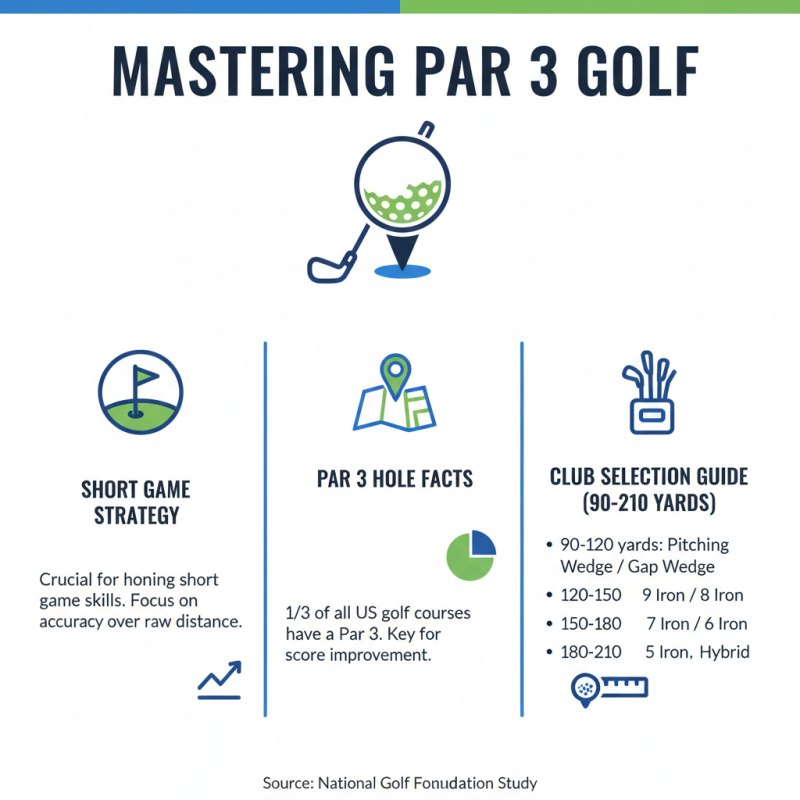
When it comes to mastering a par 3 golf course, selecting the appropriate clubs is crucial for honing your short game. According to a study by the National Golf Foundation, one-third of all golf courses in the U.S. feature at least one par 3 hole, showcasing their prevalence and importance in the game. Many golfers underestimate the significance of club selection on these shorter holes, but the right choice can significantly impact your score. Typically, par 3 holes range from 90 to 210 yards, requiring precise club choices that balance distance and accuracy.
Research indicates that nearly 40% of golfers find par 3 holes to be the most challenging segments of a golf course, often due to improper club selection, according to findings from the PGA of America. An effective strategy involves evaluating your typical distances with various clubs. For instance, a well-struck 7-iron may travel about 150 yards for an average player, making it an ideal choice for many par 3 holes. Moreover, utilizing hybrid clubs has gained popularity among golfers for their versatility and ease of use in achieving lofted shots that land softly on the green, especially on holes with water or significant elevation changes. Understanding your strengths and how they align with the requirements of par 3 holes can elevate your game and lead to more consistent play.
Strategies for Effective Practice on a Par 3 Golf Course
To effectively practice on a Par 3 golf course and improve your short game, it’s crucial to focus on specific strategies that enhance your skills. A Par 3 course, typically featuring holes that range from 100 to 200 yards, is ideal for honing precision and control. According to the National Golf Foundation, 30% of rounds played in the U.S. occur on Par 3 courses, underlining their significance in player development. Utilizing this type of course allows golfers of all levels to concentrate on their iron play and putting, which are essential components of an efficient short game.
One effective strategy is to create a structured practice session that mimics real-game conditions. Spend ample time on the tee box practicing different clubs for varying distances. Research shows that practice sessions incorporating diverse approaches can increase a player's confidence and adaptability during longer rounds. Additionally, focusing on short game skills, such as chipping and putting, can yield significant performance improvements. A study published in the Journal of Sports Science indicates that players who dedicate at least 50% of their practice time to short game skills see a 20% improvement in their putting averages. By prioritizing these areas, golfers can bolster their overall game and lower their scores on full-length courses.
Mental Preparation for Success: Playing Like a Pro on Par 3s
When it comes to mastering a par 3 golf course, mental preparation is just as important as technique. To play like a pro, you need to cultivate a strong mindset that fosters confidence and resilience. Visualizing each shot before you take it can significantly enhance your performance. Imagine the flight of the ball, the sound as it strikes the green, and the feel of a good putt sinking into the hole. This mental imagery not only sharpens your focus but also reduces anxiety, allowing you to tackle each hole with a calm demeanor.
Tips for Mental Preparation:
1. Practice mindfulness: Spend a few minutes before your round to clear your mind and focus on your breathing. This can help ground you and prepare you mentally for the game ahead.
2. Set realistic goals: Establish achievable objectives for your round, such as aiming for a certain number of putts or greens in regulation. This will keep your mind fixed on the process rather than the outcome.
Additionally, positive self-talk can significantly affect your attitude on the course. Replace negative thoughts with affirmations that emphasize your abilities and potential. Instead of dwelling on past mistakes, remind yourself of successful shots you’ve made in previous rounds. By fostering a positive inner dialogue, you create a supportive environment where your skills can thrive under pressure.
How to Play a Par 3 Golf Course Like a Pro and Improve Your Short Game - Mental Preparation for Success: Playing Like a Pro on Par 3s
| Aspect | Tips | Practice Drills | Mental Strategies |
|---|---|---|---|
| Club Selection | Assess wind and distance accurately. | Practice with a variety of clubs to identify distances. | Visualize each shot before executing. |
| Short Game Focus | Keep a steady and soft grip. | Work on chipping and putting drills. | Stay calm and positive, focusing on each shot. |
| Reading Greens | Look for slope and grain direction. | Practice reading and putting on different greens. | Develop a routine for assessing breaks. |
| Course Management | Plan each hole strategically. | Play practice rounds focusing on strategy. | Create a pre-shot routine for consistency. |
| Equipment Check | Ensure clubs and balls are suited for your game. | Regularly check grip and club conditions. | Focus on comfort with your equipment. |
Related Posts
-
2025 How to Experience the Best at Peninsula Golf Club
-
Discover the Best City Park Golf Courses Near You
-

Top 5 Executive Courses to Boost Your Leadership Skills in 2023
-

Explore the Ultimate Guide to Navigating Your Local Golf Course Map
-

How to Revive Your Old Course and Engage Students Effectively
-

Unlock Your Leadership Potential with Executive Courses A Statistical Approach to Career Advancement

Contact Us
Phone: (650) - 522-4653 (GOLF)
Fax: (650) 522-7511
Tee Time Reservations: (650) 522-4653 (GOLF)
Location
1700 Coyote Point Drive
San Mateo, CA 94401