How to Choose the Right Baseball Shirt for Your Team?
Choosing the right Baseball Shirt involves more than matching team colors. Players need comfort, movement, durability, and a professional appearance during every inning. A shirt that looks impressive online may feel heavy, tight, or poorly ventilated on the field. Fit matters. Test it.
This guide explains how to compare fabrics, sizing, stitching, customization, and supplier reliability. Lightweight polyester often dries quickly, while blended fabrics may provide a softer feel. Coaches should check sleeve movement, collar comfort, and seam placement before ordering for the whole roster. Ask for a sample. Have players wear it while throwing, batting, and running bases. Small discomforts become obvious after several innings.
Color consistency also deserves attention. Team logos should remain sharp after repeated washing, and printed numbers should resist cracking or peeling. Reliable suppliers should provide clear size charts, production timelines, care instructions, and replacement policies. They should also explain whether the design follows league requirements. Experienced team managers know that the cheapest option is not always the most practical. Still, premium pricing does not guarantee quality.
Our early sample looked excellent but restricted shoulder movement. That mistake changed our evaluation process. We now collect player feedback before approving a final order. No Baseball Shirt suits every team perfectly. Weather, playing level, budget, and personal preferences all influence the decision. By examining real use instead of relying only on photographs, teams can choose uniforms that support confidence, performance, and long-term value. Expect adjustments. Good decisions often improve through honest review.
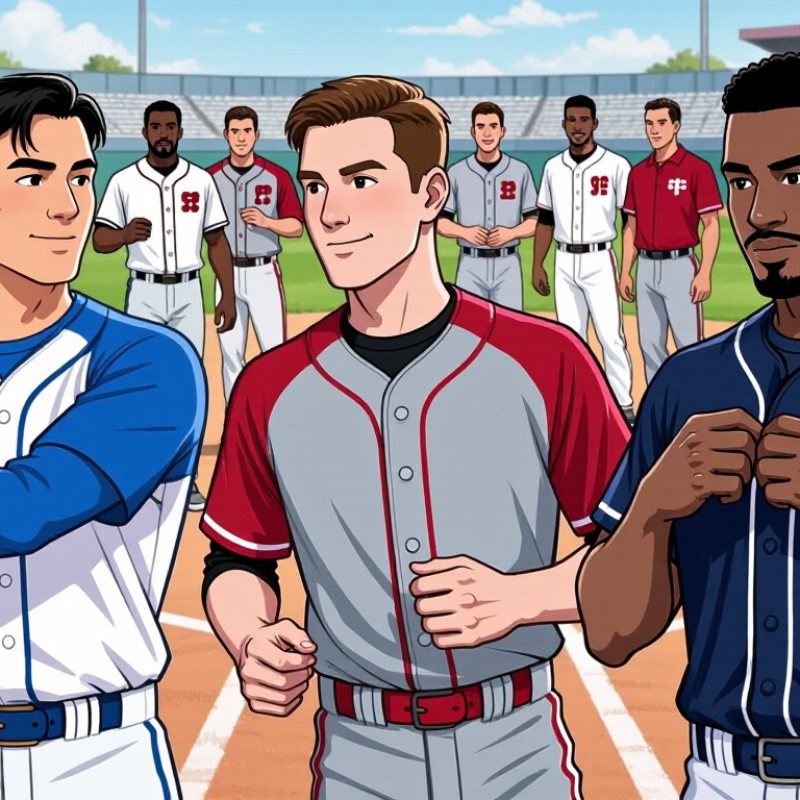
Define Your Team’s Needs and Playing Conditions
Choosing a baseball shirt starts with your team’s real needs, not a catalog photograph. Observe how players move during practice and games. A shirt for humid summer tournaments needs different fabric from one used in cool evening leagues. Ask practical questions: Do players sweat heavily? Will they slide often? Does the team play under strong sun? These answers guide fabric weight, stretch, sleeve length, and color choice. Comfort matters most.
Experienced coaches usually check moisture management, seam placement, and drying speed before appearance. A breathable polyester blend can help reduce cling when jerseys become wet. Flat or covered seams may limit rubbing around the shoulders and underarms. However, “breathable” does not always mean comfortable for every player. Some athletes dislike thin fabric because it feels exposed or tears more easily during contact with the ground. That detail is easy to miss. Have players test sample shirts through batting, throwing, and sliding drills. Record comments after practice, not just during fitting.
Playing conditions also include washing routines, field surfaces, and local weather changes. Dusty fields may favor darker lower panels, while bright fields require readable numbers and visible team colors. For night games, check whether the material remains comfortable under layered clothing. Sizing should allow shoulder rotation without creating loose fabric near the hands. Measure several players carefully, because one standard size chart can mislead a whole team. I would still review the choice after a few games.
Compare Fit, Sizing, and Player Comfort
How to Choose the Right Baseball Shirt for Your Team?
A baseball shirt should support movement, not merely display team colors. During practice, check shoulder mobility by raising both arms and rotating the torso. If fabric pulls across the back, the shirt is too narrow. Players need room for throwing, sliding, and wearing protective layers.
Sizing charts are useful, but they are not perfect. Measure chest, waist, and sleeve length over the clothing players normally wear. Compare those numbers with the size chart, then test one sample before ordering. A medium can fit loosely in one cut and tightly in another. Do not guess from age or height alone. Younger players often grow quickly, yet oversized shirts can catch during play. That trade-off deserves an honest discussion.
Comfort depends on more than width. Look for breathable fabric, smooth seams, and a collar that does not rub the neck. In a hot afternoon game, a heavy shirt may feel restrictive after several innings. In cooler weather, a roomier fit can accommodate a base layer. Ask players for feedback after real drills, not only in front of a mirror. I once judged a shirt comfortable during fitting, but the sleeve twisted while throwing. That mistake changed my process. Fit should be checked in motion, under game-like conditions, with every player’s proportions considered.
How to Choose the Right Baseball Shirt for Your Team? - Compare Fit, Sizing, and Player Comfort
| Fit and Size Option | Recommended Body Shape | Body Chest Range | Garment Chest Width | Typical Length | Movement Comfort | Best Use |
| Adult XS · Athletic Fit | Slim shoulders and torso | 32–34 in / 81–86 cm | 18–19 in / 46–48 cm | 26–27 in / 66–69 cm | High | Competitive play |
| Adult S · Athletic Fit | Lean or moderately built | 35–37 in / 89–94 cm | 19–20 in / 48–51 cm | 27–28 in / 69–71 cm | High | Competitive play |
| Adult M · Standard Fit | Average build | 38–40 in / 97–102 cm | 21–22 in / 53–56 cm | 28–29 in / 71–74 cm | High | All-purpose team wear |
| Adult L · Standard Fit | Broad shoulders or layered wear | 41–43 in / 104–109 cm | 23–24 in / 58–61 cm | 29–30 in / 74–76 cm | High | Game and warm-up use |
| Adult XL · Relaxed Fit | Larger frame or loose preference | 44–46 in / 112–117 cm | 25–26 in / 64–66 cm | 30–31 in / 76–79 cm | Very high | Training and casual wear |
| Youth S · Standard Fit | Younger, smaller frame | 26–28 in / 66–71 cm | 15–16 in / 38–41 cm | 20–22 in / 51–56 cm | High | Youth league play |
| Youth M · Standard Fit | Growing frame | 28–30 in / 71–76 cm | 16–17 in / 41–43 cm | 22–24 in / 56–61 cm | High | Youth league play |
Sizing and Comfort Checklist - Measure the player's fullest chest area while wearing a lightweight base layer.
- Choose a garment chest width that provides approximately 2–4 inches / 5–10 cm of ease for active movement.
- Check that the shoulder seam sits near the shoulder edge without restricting the throwing motion.
- For pitchers and outfielders, prioritize breathable fabric, a smooth collar, and sleeves that do not bind at the upper arm.
- If the measurement falls between sizes, select the larger size for layering or a relaxed fit; select the smaller size only when a close athletic fit is preferred.
Measurement ranges are practical team-uniform guidelines. Actual dimensions may vary by pattern, fabric stretch, and construction, so a sample fitting is recommended before placing a full team order.
Select Colors, Designs, and Custom Team Details
How to Choose the Right Baseball Shirt for Your Team?
A baseball shirt should look sharp from the dugout and remain practical during play. The SFIA 2024 Topline Participation Report recorded about 15.6 million American baseball participants in 2023. That scale makes team identity more important, not less. Choose two primary colors and one accent color. Navy with white and a bright accent usually stays readable under sunlight. Test fabric swatches outdoors before ordering. Indoor colors can look surprisingly dull.
Design should support movement and quick recognition. Use high-contrast numbers on the back and keep names easy to read. Avoid placing detailed artwork near seams, collars, or frequent contact points. Grand View Research valued the global custom T-shirt printing market at roughly 5 billion dollars in 2023, with continued growth expected through 2030. That growth offers more customization options, but more options can create clutter. I once preferred a complicated sleeve graphic; it looked impressive online, yet distracted from the player number. That was a useful mistake.
Tips: Match the shirt color with caps, socks, and belts before final approval. Ask players to test arm movement in the sample shirt. Choose moisture-managing fabric for hot tournaments. Confirm lettering sizes with the printer, especially for youth uniforms. Keep a digital color code for future replacements. A perfect design is not always the best design. Sometimes, simpler details look more professional on the field.
Evaluate Durability, Care Requirements, and Overall Value
Choosing the right baseball shirt starts with durability, not appearance. A reliable shirt should handle sliding, repeated stretching, and long practices without losing its shape. Check the shoulder seams, sleeve edges, and lower hem carefully. Reinforced stitching usually survives more movement than a single narrow seam. A breathable polyester blend can reduce moisture buildup during hot games. However, lighter fabric may tear more easily against rough dugout benches. I once chose a very soft shirt that felt excellent, but its side seams loosened after several washes.
Tips: Rub the fabric gently between your fingers. Inspect the stitching inside and outside. Ask whether replacement shirts will remain available during the season. Test the shirt with a full throwing motion before ordering for everyone.
Care requirements also affect value. A shirt that needs special washing can create extra work for families and staff. Look for clear care instructions, color stability, and quick drying. Cold washing and low-heat drying often help preserve printed numbers and fabric strength. Avoid assuming every stain will disappear easily. Red clay can remain visible after one wash, especially on pale fabric. Practice shirts may need stronger cleaning than game shirts.
Calculate the full cost, not only the purchase price. Include replacements, cleaning products, alterations, and delivery time. A cheaper shirt becomes expensive when several players need replacements midseason. Still, the most expensive option is not automatically the best. Compare durability, comfort, care effort, and expected use across one complete season. Keep a spare size available for growing players.