What Is a Selectorized Machine and How Does It Work?
A Selectorized Machine uses a weight stack connected to handles through cables, pulleys, or levers. Moving a pin between plates selects the resistance without requiring loose weight discs. As the handle moves, the selected plates rise, creating resistance through the exercise. The basic idea is simple. Setup matters.
Before exercising, adjust the seat, backrest, and starting position to fit your body. On a chest press, for example, the handles should begin near mid-chest, with your feet steady and shoulders supported. Pushing the handles moves the cable or lever system and lifts the chosen plates. As you return the handles, the stack lowers. Aim for smooth control, not a loud crash. Not always intuitive.
The guided movement path can make a machine easier to approach, especially for people learning an exercise or training without a spotter. But it does not guarantee correct form or a suitable load. Body proportions differ, and a fixed path may feel uncomfortable for some users. Start with a manageable resistance, follow the machine’s instructions, and stop if movement causes pain. Check that the selector pin is fully inserted before starting. If the setup feels awkward, pause and adjust it rather than forcing the movement. These machines offer a practical way to train, but the details still deserve attention.
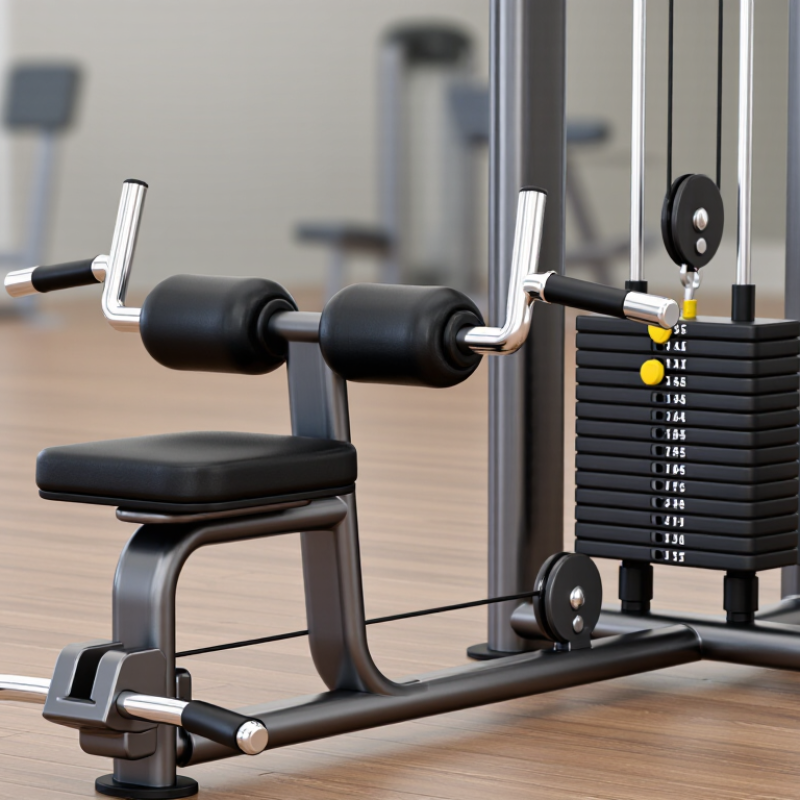
What a Selectorized Machine Is and Its Main Components
A selectorized machine uses a weight stack, cable, and pin to provide adjustable resistance. The user inserts the pin beneath a chosen plate; lifting the handle then raises the selected plates. It is straightforward to change the load. The stack usually moves inside a metal housing, while pulleys guide the cable toward handles, pads, or a bar. A seat and backrest help position the body, and adjustment points bring the moving arm into a usable range. Small details matter: a seat set too low can make the first repetition feel awkward.
Some machines use cams or linked levers to change resistance through the movement. Others provide a steadier pull. The path is guided, but your body still needs careful positioning. Set the pin fully, adjust the seat, and begin with a load you can control without swinging. Check the cable and attachments for visible wear. The pin is not magic.
The American College of Sports Medicine’s 2023 Worldwide Survey of Fitness Trends ranked strength training with free weights second and body-weight training third. These are trend rankings, not measurements of selectorized-machine use. Still, they show the broader place of resistance exercise in professional fitness discussions. A machine can make load changes quick, but it cannot choose good form for you. That part remains personal.
| Component | What It Does | How It Works | Example or User Benefit |
|---|---|---|---|
| Weight stack | Provides the machine’s selectable resistance. | A vertical stack of weight plates is lifted when the user moves the machine’s handle or pad. | The stack is enclosed on many machines to help keep the plates aligned and reduce access to moving parts. |
| Selector pin | Sets the chosen resistance. | The pin is inserted into a numbered plate or position, connecting the selected plates to the lifting mechanism. | Selecting a higher plate generally increases the resistance lifted, though the force felt can vary with the machine’s design. |
| Cable or linkage | Transfers movement between the user-contact point and the weight stack. | A cable routed over pulleys, or a mechanical linkage, moves the selected plates as the user pushes or pulls. | Smooth movement depends on suitable cable condition, pulley alignment, and regular equipment maintenance. |
| Pulleys and cam | Guide the cable and, on some machines, shape resistance through the range of motion. | Pulley placement changes the cable path. A cam’s changing shape can alter the mechanical advantage as the exercise moves. | The resistance felt at the handle may not be identical at every point in the movement. |
| Frame and guards | Support the machine and help shield moving components. | The frame holds the stack, pulleys, and exercise stations in position; guards cover selected moving areas. | A stable frame helps maintain the intended movement path during use. |
| Seat, pads, and adjustments | Position and support the user for the exercise. | Adjustable seats, backrests, or pads help align the user with the machine’s handles or movement arms. | Correct setup helps users adopt a suitable starting position; adjustment options vary by machine. |
| Handles or movement arms | Provide the points the user pushes, pulls, or moves. | They transmit the user’s effort into the machine’s cable, linkage, or lever system. | Their shape and range of motion depend on the exercise the machine is designed to perform. |
| Basic resistance cycle | Describes how the selected load moves during a repetition. | The user moves the handle or pad, the cable or linkage lifts the selected plates, and the stack lowers as the user returns to the starting position. | The selector pin lets users change the stack setting without manually loading individual plates. |

Contact Us
Phone: (650) - 522-4653 (GOLF)
Fax: (650) 522-7511
Tee Time Reservations: (650) 522-4653 (GOLF)
Location
1700 Coyote Point Drive
San Mateo, CA 94401