How to Choose the Best Tumbler Mug for Your Business?
Choosing the best Tumbler Mug for your business requires more than comparing colors, prices, and logo space. It requires evidence.
Grand View Research reports that the global reusable water bottle market was valued at approximately USD 8.2 billion in 2022. It also projects continued growth through 2030. Allied Market Research similarly identifies sustainability, portability, and rising beverage consumption as major market drivers. These figures show opportunity. They do not guarantee success.
A business should examine how customers actually use the mug. Picture a commuter placing it beside a laptop. The lid must resist leaks. The handle should feel secure. The body should fit common vehicle holders. Stainless steel, double-wall insulation, and easy-clean components can support daily use. However, premium materials may increase costs and shipping weight. That trade-off deserves honest calculation.
Eric Hudson, founder of sustainable product company Preserve, said, “The best sustainable product is the one people use again and again.” His point applies directly to drinkware. A Tumbler Mug that stays in a cupboard creates little practical value, regardless of its recycled packaging.
Suppliers should provide test results for insulation, lid durability, food-contact materials, and dishwasher performance. Request samples before approving a large order. Test them after drops, repeated washing, and several hours in a work bag. One weakness can damage customer trust.
The decision is not always obvious. A cheaper mug may produce stronger short-term margins. A better-engineered mug may create repeat orders and stronger brand recall. Businesses should measure both. That is where careful judgment begins.
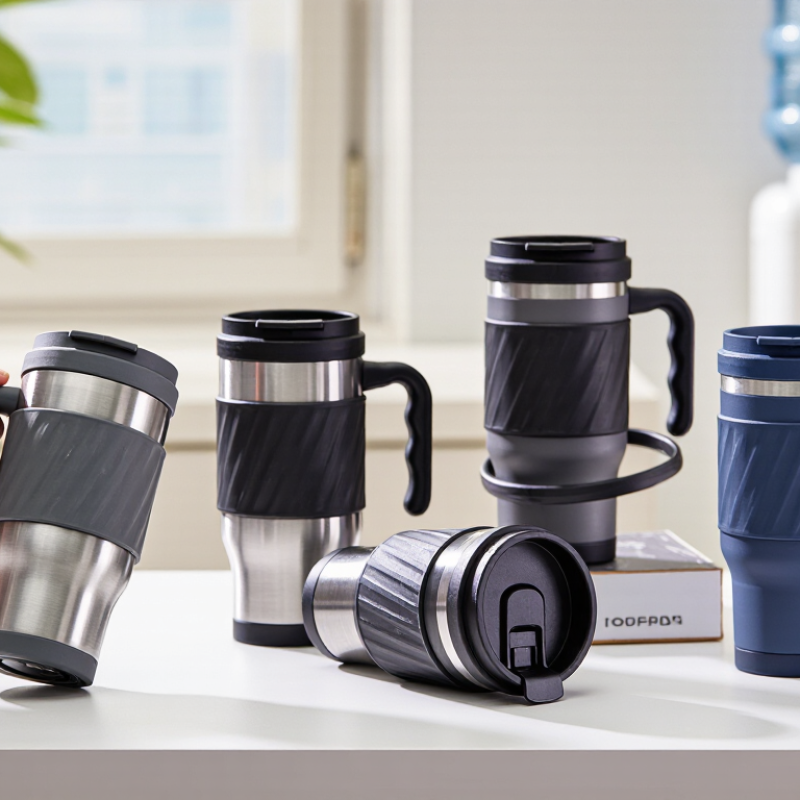
Define Your Business’s Tumbler Mug Requirements
Choosing the right tumbler mug starts with defining your business’s real requirements. A café may need strong heat retention, while a corporate office may prioritize logo visibility and easy cleaning. The National Coffee Association’s Spring 2024 report found that 67% of American adults drank coffee during the past day. That demand supports practical drinkware, but it does not justify choosing the largest mug available.
List the expected capacity, materials, lid style, and daily usage before contacting suppliers. A 12-ounce mug suits short meetings, while a 20-ounce model may serve commuters better. Stainless steel usually offers durability, but its weight can affect shipping costs and employee comfort. Check whether the lid resists leaks, the opening supports cleaning, and the surface remains comfortable after hot filling. Small details become expensive problems.
Sustainability also needs careful definition. Grand View Research estimated the global reusable water bottle market at approximately 8.08 billion US dollars in 2023, with continued growth expected through 2030. That figure signals strong interest in reusable products, not automatic proof that every tumbler is environmentally responsible. Ask for material specifications, durability testing, and credible packaging information. Avoid vague claims. I have found that teams often overvalue appearance and underestimate replacement rates. A beautiful mug that stains, leaks, or breaks after several weeks may damage customer trust more than a simpler design. Test a small batch first. Keep feedback specific. A few users may dislike the handle, and they may be right.
How to Choose the Best Tumbler Mug for Your Business? - Define Your Business’s Tumbler Mug Requirements
Use the following requirement framework to define the right tumbler mug specifications before comparing suppliers, requesting samples, or placing a bulk order.
| Requirement Dimension | Recommended Business Requirement | Practical Specifications | Priority | Why It Matters | Evaluation Question |
|---|---|---|---|---|---|
| Primary Use | Match the tumbler to the main drinking environment | Office, commuting, events, hospitality service, retail, or promotional distribution | High | The intended use affects capacity, lid design, portability, durability, and appearance. | Where and how will customers use the tumbler most often? |
| Capacity | Select a size that fits the serving habit and storage conditions | 350–400 ml for compact daily use; 450–500 ml for general-purpose use; 600 ml or more for extended outdoor use | High | Capacity influences beverage volume, product weight, shipping cost, and compatibility with cup holders. | Does the selected size fit common vehicle cup holders, bags, and workplace storage? |
| Material | Use a durable, food-contact-suitable construction | Stainless steel interior; commonly 304 stainless steel for everyday beverage use; BPA-free plastic components where applicable | High | Material affects durability, corrosion resistance, taste neutrality, weight, and perceived product quality. | Can the supplier provide material specifications and food-contact documentation? |
| Insulation | Choose insulation according to the expected beverage service period | Double-wall vacuum insulation for hot or cold drinks; single-wall construction for short-term, lower-cost use | High | Insulation helps reduce exterior condensation and slows temperature change during normal use. | What temperature-retention test method and time period will be used for sample approval? |
| Temperature Use | Define whether the product is intended for hot drinks, cold drinks, or both | Hot coffee and tea; cold water and soft drinks; avoid assuming suitability for carbonated beverages unless specifically tested | High | Temperature and beverage type can affect sealing, pressure control, cleaning, and user safety. | Are the lid, gasket, and drinking opening suitable for the planned beverages? |
| Lid and Leak Control | Specify a secure lid with replaceable sealing components | Threaded or snap-fit lid; silicone gasket; covered drinking opening; leak test required in upright and inverted positions | High | Leak prevention protects customer belongings and reduces complaints, returns, and product damage. | Has the complete assembled product passed a documented leak test? |
| Portability | Balance capacity with manageable weight and convenient handling | Target a slim profile, smooth grip, stable base, and compatibility with common cup holders where relevant | Medium | A portable design improves daily usability and makes the item more suitable for commuting or event distribution. | Can users carry, open, and place the tumbler comfortably with one hand? |
| Customization | Choose decoration methods that match the quantity and intended service life | Laser engraving for durable logos; screen or pad printing for selected surface designs; printed packaging for additional branding | Medium | Decoration affects minimum order quantity, artwork limitations, lead time, durability, and unit cost. | Will the decoration remain legible after normal washing and repeated handling? |
| Cleaning and Maintenance | Make routine cleaning simple and hygienic | Wide opening; removable gasket; limited hidden cavities; dishwasher suitability only when confirmed by testing or supplier documentation | High | Easy cleaning supports repeat use and helps prevent odor, residue, and gasket-related hygiene issues. | Can every liquid-contact component be removed, cleaned, and dried thoroughly? |
| Durability | Set a clear standard for repeated business use | Scratch-resistant exterior finish; stable base; impact-resistant lid; sample inspection for dents, coating defects, and thread wear | High | Durability reduces replacement frequency and protects the business’s perceived quality. | What drop, coating, lid-cycle, and surface-abrasion checks are included in quality control? |
| Safety and Compliance | Require documentation relevant to the destination market | Food-contact material information; BPA-related declaration for plastic parts; packaging and labeling requirements based on sales region | High | Compliance documentation supports legal market entry, retailer requirements, and customer trust. | Can the supplier provide current test reports and declarations for all product components? |
| Target Cost | Set a total landed-cost target rather than focusing only on unit price | Include product, decoration, packaging, inspection, freight, duties, and replacement allowance | High | A low factory price may not represent the final cost delivered to the business or customer. | What is the estimated total cost per usable, delivered unit? |
| Order Quantity | Align the order size with forecast demand and cash-flow limits | Confirm minimum order quantity, sample quantity, carton quantity, and acceptable overage or shortage tolerance | High | Order quantity affects pricing, customization options, inventory risk, and storage requirements. | Can the initial order be sold or distributed within the planned inventory period? |
| Packaging | Protect the product while supporting the intended customer experience | Individual protective packaging; recyclable materials where practical; carton drop and moisture protection for shipping | Medium | Packaging influences transit damage, shelf presentation, storage volume, and sustainability expectations. | Does the packaging protect the tumbler without creating unnecessary shipping volume? |
| Sampling and Approval | Approve a production sample before bulk manufacturing | Check dimensions, weight, capacity, seal performance, finish, logo placement, cleaning access, and packaging | High | A documented sample approval process reduces specification disputes and inconsistent bulk production. | Has every critical requirement been measured and recorded on the approved sample? |
Planning note: The specifications above are general purchasing guidelines. Final requirements should be confirmed through product samples, supplier documentation, applicable regulations, and the actual conditions of use.
Contact Us
Phone: (650) - 522-4653 (GOLF)
Fax: (650) 522-7511
Tee Time Reservations: (650) 522-4653 (GOLF)
Location
1700 Coyote Point Drive
San Mateo, CA 94401