How to Choose the Best Breathable Shirt for Global Buyers?
Choosing the best Breathable Shirt is not simply a fabric decision. It is a climate, fit, and performance decision.
Global buyers face humid ports, dry warehouses, hot commutes, and unpredictable washing conditions. A shirt that feels cool in Shanghai may feel slow-drying in Dubai. No fabric wins everywhere. That assumption needs testing. The Grand View Research sports apparel report valued the global market at approximately USD 249.9 billion in 2023, showing strong demand for performance-led clothing. Meanwhile, Textile Exchange’s Materials Market Report 2024 recorded global fiber production at about 124 million tonnes in 2023. Polyester remained the dominant fiber, while cotton continued to support comfort-focused products. These figures reveal both opportunity and responsibility.
Dr. Seshadri Ramkumar, a textile materials specialist, explains, “Comfort begins with managing heat and moisture.” That principle should guide every Breathable Shirt purchase. Buyers should examine fiber composition, air permeability, moisture-vapor transmission, drying speed, fabric weight, and seam construction. A loose weave may improve airflow, yet it can reduce durability. A mesh panel may improve cooling, but it can complicate branding and care. Small details matter. Touch the fabric. Check the inside seams. Review laboratory test methods, not only marketing claims.
Reliable sourcing also requires traceable materials, consistent sizing, colorfastness data, and practical care instructions. Certifications can support confidence, but they do not replace product testing. A sample may perform well once, then disappoint after repeated washing. That possibility deserves attention. The strongest choice balances comfort, climate suitability, durability, compliance, and total cost for the intended market.
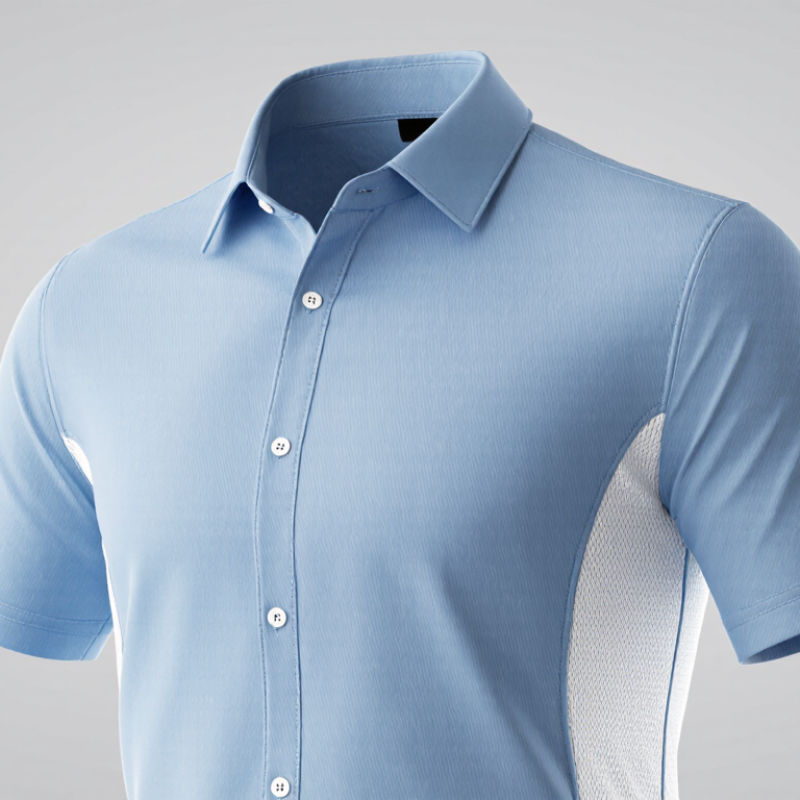
Understanding Breathable Shirt Fabrics and Their Key Properties
How to Choose the Best Breathable Shirt for Global Buyers?
Understanding Breathable Shirt Fabrics and Their Key Properties
Breathability depends on more than a fabric’s soft touch. Cotton absorbs moisture well and feels familiar against the skin. Linen releases heat quickly through its loose structure. However, linen can wrinkle easily and may feel rough after repeated washing. Synthetic fibers often dry faster, but some trap odor without suitable finishing.
Look closely at air permeability, moisture management, fabric weight, and weave density. A lightweight shirt with an open weave usually allows better airflow. Yet, very open fabric may become transparent or lose shape. Moisture-wicking performance matters in humid markets. A shirt should move sweat away from the skin, not simply absorb it.
Check test reports from qualified laboratories when comparing suppliers. Useful data includes air permeability, drying time, colorfastness, shrinkage, and seam strength. Touch testing still has value. Wear the shirt indoors, then walk outside on a warm afternoon. Notice the back, underarms, and collar. These areas reveal heat buildup quickly.
There is no perfect breathable fabric. A cool shirt may need more careful washing. A durable option may feel less airy. Country climate, customer habits, and price targets should guide the final choice. Also, results can change after dyeing or finishing, so pre-production samples deserve another review. Small details matter.
How to Choose the Best Breathable Shirt for Global Buyers? - Understanding Breathable Shirt Fabrics and Their Key Properties
| Fabric Type | Typical Fiber Content | Common Shirt Weight | Air Permeability | Moisture Absorption | Drying Speed | Thermal Comfort | Wrinkle Behavior | Durability | Best Climate or Use | Key Buying Considerations |
|---|---|---|---|---|---|---|---|---|---|---|
| Linen | 100% flax fiber or linen blends | 100–190 g/m² | High; often approximately 100–300 L/m²/s in lightweight open constructions | High; absorbs moisture readily and feels relatively dry because moisture spreads across the surface | Medium to fast | High tendency to crease; relaxed appearance is normal | High; strong bast fiber, although repeated abrasion may cause surface wear | Hot, dry, and warm-humid climates; resort, casual, and summer shirts | Check softness, yarn quality, shrinkage control, and whether a linen blend is preferred for easier care | |
| Cotton | 100% cotton or cotton blends | 100–220 g/m² | Medium to high, depending strongly on weave and finishing | High; absorbs perspiration but can feel wet when heavily saturated | Slow to medium | Medium to high; wrinkle resistance improves with finishing or blending | Medium to high; varies by staple length, yarn, and construction | General everyday wear, warm climates, uniforms, and casual shirts | Choose lightweight poplin, voile, gauze, or seersucker for more airflow; evaluate shrinkage and colorfastness | |
| Seersucker Cotton | Usually 100% cotton or cotton blends | 90–160 g/m² | High; the puckered surface reduces fabric-to-skin contact | High | Medium | Low visual need for pressing because of the naturally puckered texture | Medium to high | Hot and humid climates, summer collections, and travel shirts | Inspect puckering consistency, colorfastness, seam stability, and dimensional change after washing | |
| Lyocell | Regenerated cellulose fiber from wood pulp | 100–180 g/m² | Medium to high, depending on weave and fabric density | High; good moisture uptake and a smooth hand feel | Medium | Medium; generally smoother than linen but may develop creases during wear | Medium; wet abrasion and surface fibrillation should be evaluated | Warm climates, soft casual shirts, draped silhouettes, and sensitive skin applications | Confirm pilling resistance, wet strength, laundering performance, and blend compatibility | |
| Moisture-Wicking Polyester | 100% polyester or polyester blends | 90–170 g/m² | Medium to very high in engineered mesh or microfilament fabrics | Low fiber absorption; engineered surfaces transport liquid away from the skin | Fast | Low; usually retains shape well | High; strong resistance to abrasion and repeated washing | Hot, humid, and high-activity conditions; performance, travel, and work shirts | Verify moisture-management test results, odor-control claims, pilling, static, and colorfastness | |
| Nylon | 100% nylon or nylon blends | 80–160 g/m² | Medium to high in lightweight woven or knitted constructions | Low to medium fiber absorption | Fast | Low; typically resists wrinkling | Very high; excellent abrasion resistance, but heat sensitivity must be considered | Outdoor, travel, lightweight utility, and active shirts | Check UV stability, odor retention, static behavior, snag resistance, and care-label temperature limits | |
| Merino Wool | Fine wool fiber, commonly blended for added durability | 120–200 g/m² | Medium; lightweight jersey or open knits provide better airflow | High moisture-vapor absorption without feeling immediately wet | Medium | Medium; can crease less visibly but may need careful care | Medium; prone to abrasion and felting if incorrectly washed | Variable climates, travel, layering, and odor-sensitive applications | Assess fiber fineness, pilling resistance, shrinkage, washability, and possible sensitivity to wool | |
| Hemp | 100% hemp or hemp-cotton blends | 130–240 g/m² | Medium to high, depending on yarn and weave openness | High; absorbs moisture and becomes softer with wear | Medium | High to medium; naturally textured and prone to creasing | High; strong natural bast fiber | Warm climates, casual shirts, and durability-focused collections | Check hand feel, blending ratio, slub consistency, shrinkage, and surface softness after washing | |
| Viscose | Regenerated cellulose fiber from wood pulp | 90–180 g/m² | Medium to high in lightweight fabrics | High; absorbs moisture well but can feel damp when saturated | Medium | Medium to high; prone to creasing and shape change when wet | Medium to low when wet unless specially engineered or blended | Warm climates, soft fashion shirts, and fluid silhouettes | Test wet strength, shrinkage, color bleeding, seam slippage, and washing performance |
Contact Us
Phone: (650) - 522-4653 (GOLF)
Fax: (650) 522-7511
Tee Time Reservations: (650) 522-4653 (GOLF)
Location
1700 Coyote Point Drive
San Mateo, CA 94401