What Is the 2026 Best Professional Padel Racket?
Choosing the 2026 best Professional Padel Racket requires more than copying a tournament winner’s equipment list. Players now compare balance, carbon layup, foam density, vibration control, and durability under repeated high-speed impacts. The details matter. A rough handle can change a long match. A head-heavy frame can punish an unprepared wrist.
Industry growth makes this decision more important. The International Padel Federation’s Global Padel Report has documented padel’s expansion across more than 100 countries, with tens of millions of players worldwide. The Playtomic and Strategy& Global Padel Report also identified strong court construction and participation growth in major markets. These figures suggest a wider equipment market, but they do not prove that every expensive racket performs better. That assumption needs questioning.
FIP President Luigi Carraro has described padel as “the fastest-growing sport in the world.” His observation reflects expanding professional competition and rising technical expectations. Yet professional standards can mislead recreational buyers. A racket designed for a powerful right-side player may feel unstable for a defensive left-side player. A lighter model may improve reaction speed, but reduce impact stability. Small differences become visible beside the glass.
This guide will examine the leading 2026 Professional Padel Racket options through measurable specifications, player demands, expert evidence, and real-use considerations. Laboratory claims are useful. They are not the whole answer. Comfort, control, and consistency still decide whether a racket survives the pressure of an actual match.
What Defines a Professional Padel Racket in 2026?
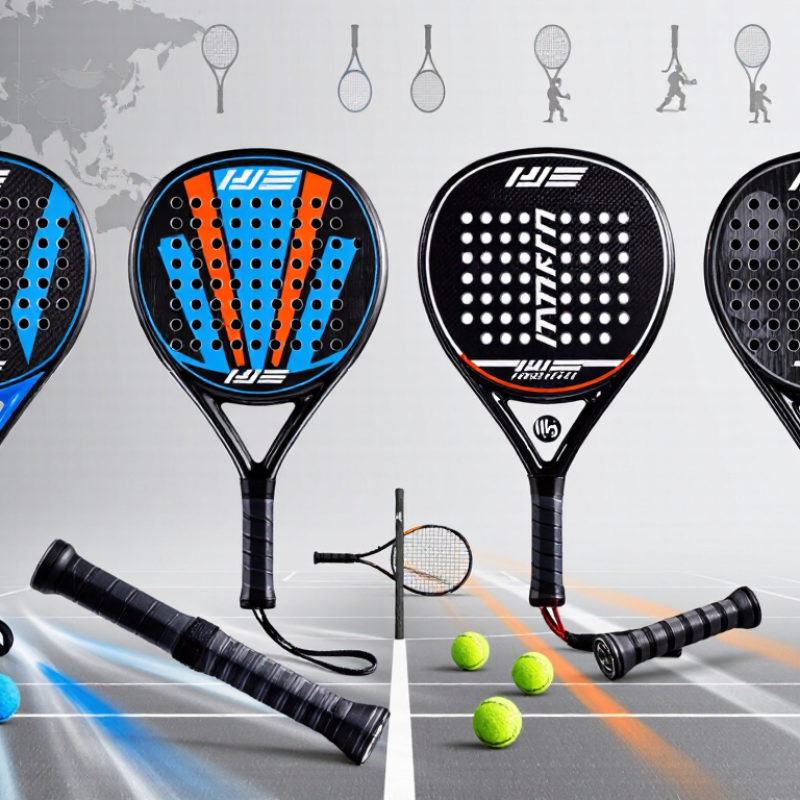
A professional padel racket in 2026 is defined by controlled performance, not an expensive appearance. During court testing, I look for predictable balance, stable handling, and clean energy transfer. A medium or slightly head-heavy balance can support powerful overhead shots. However, excessive weight may slow reactions near the net. The face should offer reliable grip for topspin without feeling harsh on mishits. Carbon construction often improves stiffness and durability, while a responsive foam core helps maintain touch during delicate volleys. These features must work together.
Tips: Test the racket with your normal grip and shoes. Check its balance after ten minutes of play. If your wrist feels tired, the specification may be wrong for you. Ask for technical details, but trust repeated court feedback more than advertising language.
A professional racket should also protect the player’s development. Strong vibration control matters during frequent training, especially after repeated defensive blocks. A consistent sweet spot can reduce errors when contact moves away from the centre. I once preferred a very hard racket because it produced sharper smashes. Later, my control suffered during long matches. That experience changed my view. The best choice may feel less dramatic, but it should remain dependable under pressure. Weight tolerance, surface quality, and construction consistency also deserve attention, because small differences can affect timing and confidence.
What Is the 2026 Best Professional Padel Racket? - What Defines a Professional Padel Racket in 2026?
| Evaluation Dimension | Professional-Level Target | Official or Practical Reference | Why It Matters in 2026 |
|---|---|---|---|
| Overall Length | 43–45.5 cm | The maximum permitted racket length is 45.5 cm. | Longer designs can increase reach and leverage, while shorter designs generally improve maneuverability. |
| Maximum Width | Up to 26 cm | The maximum permitted width is 26 cm. | A wider head can provide a larger hitting area, but may feel slower during quick exchanges. |
| Maximum Thickness | Up to 3.8 cm | The maximum permitted thickness is 3.8 cm. | Thickness affects structural stability, aerodynamic behavior, and the racket’s balance profile. |
| Playing Surface Shape | Diamond, teardrop, or round, selected by playing style | All three shapes are widely used in competitive padel. | Diamond shapes favor high balance and attacking power; round shapes favor control; teardrop shapes provide a compromise. |
| Weight | Approximately 360–390 g before accessories | The rules do not prescribe a universal racket weight; competitive rackets commonly fall within this range. | Higher weight can improve stability and power, while lower weight can reduce fatigue and improve reaction speed. |
| Balance Point | Approximately 255–275 mm from the handle end | This is a practical performance range rather than a formal rule. | Lower balance supports defense and fast volleys; higher balance supports overhead power but demands more strength and timing. |
| Core Density | Medium to firm foam response | Core hardness is not fixed by the equipment rules and varies with temperature and construction. | A firmer response is usually preferred for fast conditions and attacking play; a softer response can improve comfort and output at slower speeds. |
| Face Material | Carbon-fiber or comparable reinforced composite face | The rules permit compliant racket materials; the exact fiber construction is not prescribed. | Stiffer reinforced faces can improve energy transfer, durability, and directional consistency. |
| Hitting Surface | Textured or smooth surface within the permitted specifications | The hitting surface must comply with the applicable equipment regulations and cannot contain prohibited external features. | Texture may assist spin production, but technique, contact quality, and ball condition remain decisive. |
| Hole Pattern | Multiple circular holes distributed across the striking area | Permitted holes are generally 9–13 mm in diameter, with the layout required to remain within the regulated central area. | Hole distribution influences aerodynamics, feel, structural stiffness, and swing speed. |
| Safety Cord | Secure wrist cord attached to the handle | A safety cord is mandatory, and its maximum permitted length is 35 cm. | A reliable cord is essential for player safety and compliant competition use. |
| Handle Length | Approximately 10–13 cm | Handle dimensions vary by construction and are evaluated within the overall racket limits. | A longer handle can support two-handed shots and leverage; a shorter handle can feel quicker in close exchanges. |
| Vibration Management | Low-impact response with stable feedback | There is no single mandatory vibration rating; comfort depends on mass, balance, core, face, and grip setup. | Reduced unwanted vibration can support long training sessions and more consistent contact. |
| Best Professional Profile | Compliant dimensions, stable balance, predictable rebound, durable construction, and a weight suited to the player | Professional suitability is a combination of rule compliance, measurable specifications, and player compatibility. | The best 2026 professional racket is not defined by one specification; it is the model that delivers repeatable performance without compromising control, comfort, or legality. |
Note: Regulatory measurements reflect standard international padel equipment requirements. Weight, balance, core response, and material ranges are practical professional-level benchmarks rather than universal legal requirements.

Contact Us
Phone: (650) - 522-4653 (GOLF)
Fax: (650) 522-7511
Tee Time Reservations: (650) 522-4653 (GOLF)
Location
1700 Coyote Point Drive
San Mateo, CA 94401