What Is the Best Dry Land Music Fountain in 2026?
Choosing the best Dry Land Music Fountain in 2026 takes more than watching a dramatic show. A reliable comparison should consider water effects, musical timing, installation quality, maintenance, and the needs of the site. In a well-designed system, flush-mounted nozzles rise from a paved surface, then disappear when the display ends. Looks matter. So do drainage, slip resistance, and clear operating procedures.
The details make a difference. Look for synchronized pumps, lighting that remains legible after dusk, and controls that allow staff to adjust a show without guesswork. Ask how the system handles wind, changing water conditions, and routine cleaning. A short demonstration can reveal uneven jets or delayed cues. Small flaws show. Check what the supplier documents, including performance specifications, maintenance needs, warranties, and support arrangements. Claims should be verifiable, not just impressive.
This guide explores what “best” can mean for public plazas, resorts, commercial spaces, and other outdoor settings. It compares practical features rather than treating one installation as ideal for every project. A compact fountain may suit a busy courtyard, while a larger venue may need more flexible programming and service access. No ranking is perfect; site conditions and budgets change the answer. Use the sections ahead to weigh visual impact against upkeep, reliability, and visitor comfort before choosing a Dry Land Music Fountain.
What Is a Dry Land Music Fountain?
What Is the Best Dry Land Music Fountain in 2026?
What Is a Dry Land Music Fountain?
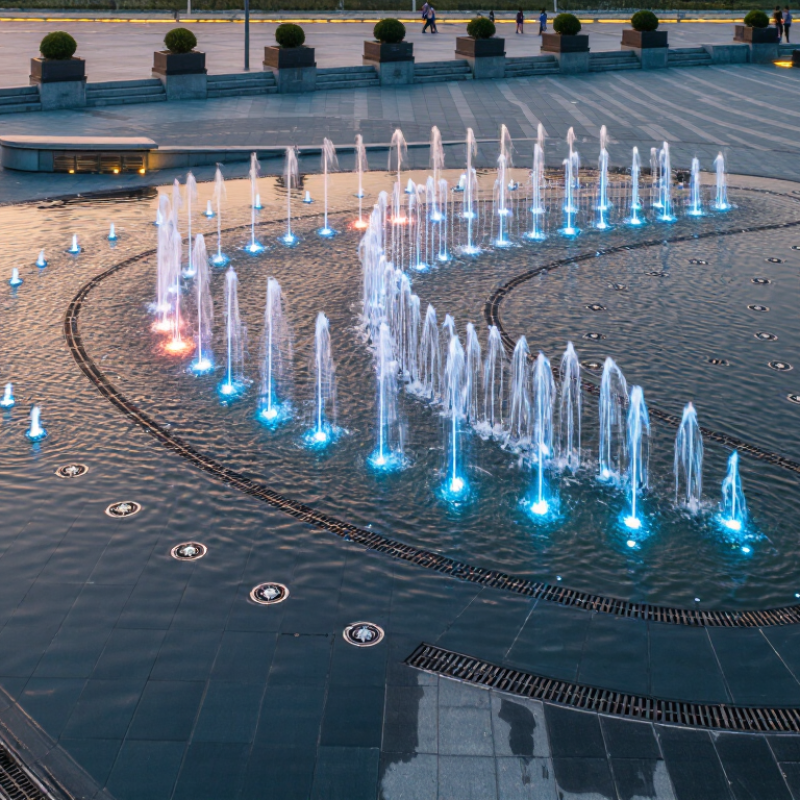
A dry land music fountain, also called a dry-deck fountain, has no permanent visible pool. Water rises through flush-mounted nozzles, then drains through gaps in the paving into a hidden collection tank. Pumps filter and recirculate it. When the jets stop, the surface is open for people to cross or gather on. During operation, however, splashing can make paving slippery.
Music and water are coordinated through a control system that adjusts jet height, timing, and lighting. The effect can feel spontaneous, but it depends on careful nozzle spacing, drainage, and maintenance. EPA WaterSense reports that landscape irrigation uses nearly 9 billion gallons of water daily in the United States. That figure is not fountain-specific, but it highlights why recirculation and splash-loss control matter. Water still evaporates or escapes the deck.
Lighting often uses LEDs. The U.S. Department of Energy says LEDs use at least 75% less energy than incandescent lighting; this comparison applies to the light source, not the fountain’s total power use. A practical design also needs accessible filters, safe drainage, and controls that staff can understand. The term “dry” can be misleading: the deck is dry only when the system is off and properly drained.

How Does a Dry Land Music Fountain Work?
What Is the Best Dry Land Music Fountain in 2026?
How Does a Dry Land Music Fountain Work?
A dry land music fountain sends water through nozzles set flush with a paved surface. Beneath the deck, a reservoir collects the falling water and returns it through filters and pumps. A controller reads a programmed music track, then coordinates valves, pump speed, and lighting. Water jets rise and fall with the beat. Then the music starts. The effect looks effortless, but timing depends on careful calibration.
The U.S. Department of Energy’s Improving Pumping System Performance sourcebook notes that pumping systems use about 20% of global electricity demand. That broad figure is not specific to fountains, but it shows why pump selection and control matter. Efficient pumps, properly sized pipes, and regular filter cleaning can reduce wasted energy and help keep jets consistent. Operators also need drainage that handles splash, rain, and sudden changes in water level. Small details matter. A partly blocked nozzle can make one musical cue look strangely uneven.
Tips: Ask how the system manages water treatment, slip resistance, maintenance access, and emergency shutoff. Watch a full performance from several angles, not just the control booth. Check whether the music timing can be adjusted without rebuilding the hardware. A little water loss is normal; unexplained loss deserves investigation.
What Is the Best Dry Land Music Fountain in 2026? How Does It Work?
Pressure and theoretical jet height
A dry-deck fountain typically draws water from a concealed reservoir. Pumps supply pressure, while valves and a show controller coordinate the jets with music; water falls back through the deck into the reservoir for recirculation.
The chart uses the ideal physics relationship between pressure and water-column height: h = P / (ρg). Real jet heights are lower and vary with nozzle design, pipe losses, wind, and system configuration, so these values are not a product-performance ranking.
What Features Define a High-Quality Fountain in 2026?
A high-quality dry-land music fountain in 2026 should feel inviting when it is running and unobtrusive when it is not. Flush-mounted nozzles leave the plaza open for walking, while carefully finished surfaces help reduce slipping. When inactive, the pavement should drain without leaving broad puddles. That matters. No pond is needed.
Reliable performance depends on more than bright lights and tall jets. Pumps should deliver steady pressure, and filtration should keep recirculated water clear. Jets need to respond cleanly to musical changes, without lagging or producing a confusing spray pattern. Lighting should reveal the water without glaring into nearby windows. Sound levels also deserve attention; a show that overwhelms conversation can quickly feel tiring.
Controls should allow operators to adjust timing, water height, and lighting for different events. Access panels should be reachable, but protected from public contact. Maintenance access is easy to overlook. It can determine whether a small nozzle blockage becomes a quick repair or a long closure. Ask for clear operating and maintenance records, plus realistic information about water and energy use. Even a well-designed fountain will need cleaning, inspection, and occasional adjustment. No checklist catches everything.
What Types of Dry Land Music Fountains Are Available?
Dry-land music fountains generally come in three forms. Flush-deck jet systems hide nozzles beneath grates or paving. Water rises through the surface, then drains into a concealed basin. They suit plazas where people need an unobstructed surface between shows.
Interactive systems use sensors or programmed controls to vary jet height and timing. Choreographed systems synchronize water, lighting, and music for scheduled performances. Mist-based features create a softer effect, though wind can quickly scatter the spray. Each type has trade-offs.
For lighting, the U.S. Department of Energy reports that LEDs use up to 75% less energy than incandescent lighting and can last up to 25 times longer. That makes LEDs a practical option for underwater color effects, provided fixtures are rated for wet locations.
A system’s actual performance depends on nozzle selection, pump sizing, drainage, and control programming. A striking test run can still reveal uneven jet heights or slippery overspray. These details deserve a site review before installation.
Tips: Match the fountain type to the space. For a busy plaza, confirm that grates sit flush and drainage clears water promptly. Ask for measured sound, splash, and maintenance requirements—not just visual renderings. Pilot tests help. A small compromise in show timing may be needed when wind or water conditions change.
How to Choose the Best Dry Land Music Fountain for a Site?
Choosing a dry land music fountain starts with the site, not the song list. Measure the usable area, note nearby doors and walking routes, and check where water could splash on paving. A compact plaza may need lower jets and tighter choreography, while a broad civic square can support wider patterns. Keep clear sightlines from benches and accessible routes. Small details matter.
Water supply and maintenance deserve equal attention. The U.S. Environmental Protection Agency reports that outdoor use can exceed 30% of household water use nationally and reach 60% in some arid areas. Those figures describe homes, not public fountains, but they underline why recirculation, leak detection, and evaporation planning matter. Ask designers for expected make-up water under local conditions, not just a best-case estimate. Dry land systems still need drainage, filtration, and routine cleaning. And winter planning.
Match sound and lighting to the surroundings. Test music levels at nearby seating and residences; a loud daytime demo can mislead. The U.S. Department of Energy says LEDs use at least 75% less energy than incandescent lighting, though actual fountain savings depend on controls and operating hours. Request a maintenance schedule, component access plan, and realistic energy estimate before approving a concept. A beautiful rendering is not a service plan. It is easy to overlook that.
| Selection dimension | Site data to collect | A suitable design direction | Why it matters |
|---|---|---|---|
| Primary use | Identify whether the fountain is mainly for music-led performances, casual viewing, interactive play, or cooling. | Choose choreographed jets for programmed shows; interactive flush-mounted jets for play; misting elements for cooling. | Different nozzle and control layouts support different activities. One layout may not serve every use equally well. |
| Usable footprint | Measure the available paved area and mark pedestrian routes, accessible paths, seating, entrances, and emergency access. | Keep jets clear of required circulation routes; consider a compact, flush-deck layout where space is constrained. | A dry-deck fountain should fit the public space without obstructing its everyday use when the water features are off. |
| Wind and exposure | Review prevailing wind direction, nearby buildings, open exposure, and local weather conditions. | Use adjustable jet heights and sequences, and test spray patterns on site during commissioning. | Wind can carry spray beyond the fountain, wet nearby paving, and affect the appearance of water patterns. |
| Drainage and water recovery | Confirm paving falls, drainage capacity, the location of the below-grade collection tank, and access for cleaning. | Specify a coordinated collection and recirculation system designed for the site’s paving and drainage conditions. | Dry-deck systems typically collect water below or around the deck and recirculate it; effective drainage helps limit surface pooling. |
| Paving and slip resistance | Check the paving material, surface finish, expected wet conditions, and applicable local accessibility and safety requirements. | Select exterior paving appropriate for wet use and coordinate the deck surface with drainage and access details. | Water may reach the surrounding walking surface, so wet-condition performance and accessible routes need to be considered together. |
| Water quality and maintenance | Ask for the proposed filtration and water-treatment approach, cleaning access, maintenance tasks, and local health-code requirements. | Favor equipment that staff can inspect and maintain safely, with treatment designed for the intended public use. | Recirculated water needs an appropriate management plan; treatment requirements depend on the system and local rules. |
| Music and controls | Define show schedules, music source, sound limits, operating hours, control-room needs, and who will operate the system. | Match the control system to the required show complexity; include manual operation and clear shutdown procedures. | More elaborate synchronization can add programming and operator requirements. Music and public-address rules may also apply locally. |
| Energy and operating cost | Request pump power, lighting load, expected operating schedule, water make-up estimate, and service requirements. | Compare designs using the same operating schedule and include energy, water, treatment, and maintenance in lifecycle estimates. | Actual consumption depends on pump selection, jet configuration, lighting, climate, and run time; headline equipment figures alone are not enough. |
| Best overall choice | Compare site fit, safety, water management, show quality, maintainability, and whole-life cost. | Choose the design that meets the site’s highest-priority needs and can be operated and maintained with available staff and budget. | There is no universally best dry-land music fountain; the right choice depends on site conditions, intended use, and local requirements. |
Planning note: Confirm final hydraulic, electrical, structural, accessibility, water-treatment, and safety requirements with qualified project professionals and the relevant local authorities.
Article Source:
Contact Us
Phone: (650) - 522-4653 (GOLF)
Fax: (650) 522-7511
Tee Time Reservations: (650) 522-4653 (GOLF)
Location
1700 Coyote Point Drive
San Mateo, CA 94401