What Are the Best Baseball Hoodies from China?
Choosing the best Baseball Hoodies from China requires more than comparing attractive catalog photos. Buyers should examine fabric weight, stitching, print durability, sizing accuracy, and supplier communication. A hoodie may look premium online but feel thin after one wash. That difference matters.
China offers a wide range of manufacturers, from small custom workshops to experienced sportswear factories. The strongest suppliers usually provide clear material specifications, production samples, and consistent quality-control records. Ask about cotton-polyester blends, fleece density, ribbed cuffs, zipper performance, and colorfastness. A practical sample test can include washing, stretching, and checking the embroidery edges under bright light. Small details reveal large problems.
Real experience also teaches caution. A factory with polished images is not automatically reliable. Request recent product samples and verify business information before placing a large order. Independent inspections can help confirm measurements, packaging, labeling, and final quantities. Compliance with labor, product-safety, intellectual-property, and import requirements should remain part of the evaluation. Legal sourcing protects both buyers and manufacturers.
Some imperfections are unavoidable. Minor differences may appear between samples and bulk production. However, unexplained changes should never be ignored. The best Baseball Hoodies balance comfort, design, durability, and responsible manufacturing. This guide compares practical supplier qualities, customization options, pricing considerations, and quality checks. It does not assume the cheapest offer is the best. Sometimes, paying slightly more prevents expensive returns later.
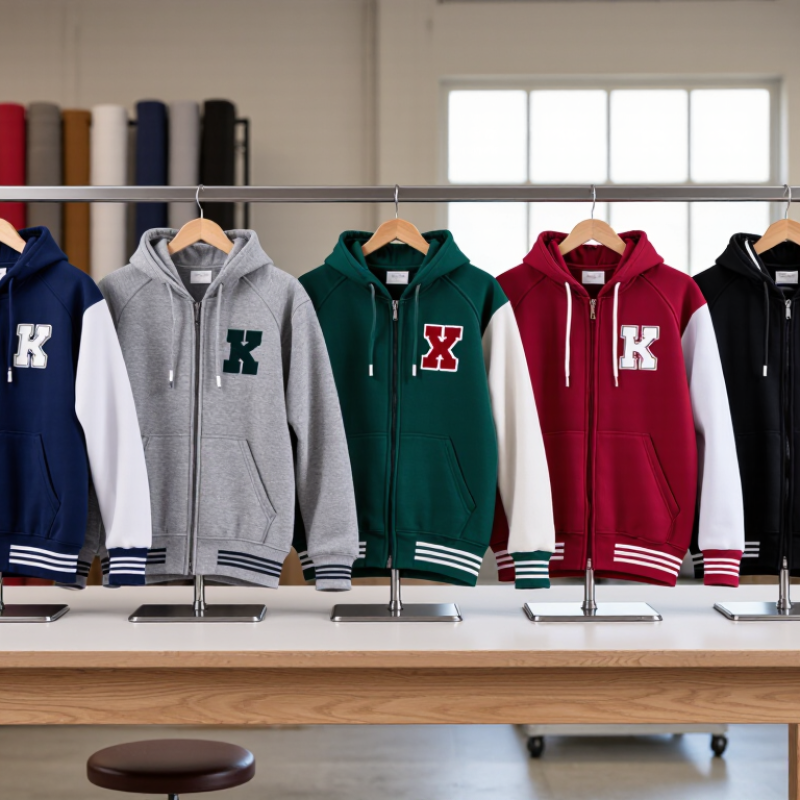
What Defines a High-Quality Baseball Hoodie from China?
A high-quality baseball hoodie from China begins with the fabric, not the logo. A practical sample should feel dense, soft, and stable after washing. A cotton-polyester blend often balances comfort, shape retention, and drying speed. Fabric weight around 280–380 GSM suits cool-season training and casual wear. However, heavier does not always mean better. Thick fleece may trap heat during active play. Check the inside carefully. Even loops, clean brushing, and no loose fibers suggest controlled production. The hood should keep its shape without feeling stiff. Flat drawcords and metal-free tips can reduce irritation. Small details matter.
Construction reveals more than product photos. Reinforced shoulder seams, double-needle stitching, and secure cuffs help the hoodie survive repeated movement. The kangaroo pocket should sit evenly and hold its shape. Test the zipper, if included, several times. It should glide smoothly without pulling the fabric. Screen printing must stay sharp after washing, while embroidery should feel firm but not scratch the skin. Size measurements deserve independent checking because a labeled medium can fit differently across factories. I would request a pre-production sample, wash it three times, and compare measurements before placing an order. That process is slower. It prevents expensive surprises. Reliable suppliers should provide fiber details, care instructions, inspection records, and consistent sample approvals. Still, mistakes happen. A slight color shift or uneven cuff may escape inspection, so clear tolerances and photos are essential.
What Are the Best Baseball Hoodies from China? - What Defines a High-Quality Baseball Hoodie from China?
| Quality Dimension | Recommended Benchmark | Why It Matters for a Baseball Hoodie | What to Check Before Ordering |
|---|---|---|---|
| Fabric Weight | Approximately 280–380 GSM for a substantial midweight to heavyweight hoodie | A higher fabric weight generally provides better warmth, structure, and durability, while a lower weight can improve breathability and reduce cost. | Request the measured GSM of the actual production fabric and compare it with the approved sample. |
| Fiber Composition | Cotton-rich fleece, cotton-polyester blend, or 100% polyester performance fleece depending on the intended use | Cotton improves softness and comfort; polyester improves shape retention, drying speed, and resistance to repeated washing. | Confirm the fiber percentage through the specification sheet and, when necessary, laboratory testing. |
| Inner Surface | Even brushed fleece or smooth French terry with consistent coverage | A uniform inner surface improves comfort and reduces uneven pilling, loose fibers, and cold spots. | Inspect the fabric under strong light and rub-test several areas, including the hood and sleeve panels. |
| Pilling Resistance | A tested fabric should show limited pilling after repeated abrasion; the required test level should be agreed in advance | Baseball hoodies are often worn during travel, training, and layering, which creates friction against bags and other garments. | Ask for a fabric pilling report using a recognized method such as ISO 12945 or an equivalent agreed standard. |
| Shrinkage Control | Preferably within about 3% after the specified washing process, subject to the fabric type and agreed tolerance | Controlled shrinkage helps preserve sleeve length, body length, and logo placement after laundering. | Wash-test the production sample according to the care label and measure before and after washing. |
| Seam Construction | Even stitching, secure seam ends, and reinforced stress points at the armholes, pocket openings, and hood joins | These areas receive frequent pulling and movement during sports and everyday wear. | Check for skipped stitches, open seams, loose threads, puckering, and inconsistent seam allowance. |
| Stitch Density | Consistent stitch density appropriate for the fabric; approximately 9–12 stitches per 3 cm is a useful inspection reference for many knit garments | Consistent stitching supports seam strength and creates a cleaner appearance without unnecessarily damaging the fabric. | Measure several seams rather than checking only one visible area of the garment. |
| Ribbed Cuffs and Hem | Rib fabric with reliable recovery, commonly using a cotton blend with elastane or another suitable stretch structure | Good recovery keeps the cuffs and hem close to the body and reduces stretching after repeated wear. | Stretch and release the rib several times, then check whether it returns close to its original dimensions. |
| Hood Design | Balanced hood depth, smooth neckline attachment, and a stable opening that does not twist | A well-shaped hood improves comfort, appearance, and protection from wind without placing excess weight on the neckline. | Try the hood on a fit model and inspect the neckline seam for twisting or excessive bulk. |
| Kangaroo Pocket | Symmetrical placement, reinforced pocket corners, and sufficient depth for practical use | The pocket is a high-stress area that can sag or separate when loaded with personal items. | Check pocket alignment, corner bartacks or reinforcement, opening width, and attachment strength. |
| Baseball Graphics | Screen print, embroidery, heat transfer, or appliqué selected according to artwork complexity and expected wear | The decoration should remain legible and securely attached without making the garment stiff or uncomfortable. | Perform wash and stretch tests; inspect for cracking, peeling, bleeding, loose threads, or edge lifting. |
| Colorfastness | Color should resist noticeable transfer or fading during washing, rubbing, and perspiration exposure | Team-style colors and contrast panels need stable color performance to maintain a professional appearance. | Request colorfastness testing or conduct wet-rubbing, dry-rubbing, and wash tests on the approved fabric. |
| Sizing and Fit | A documented measurement chart with agreed tolerances for chest, body length, sleeve length, and shoulder width | Accurate grading reduces inconsistent fit between sizes and helps prevent costly returns. | Measure a complete size set against the specification sheet, including after-wash measurements. |
| Safety and Compliance | Correct fiber labels, care instructions, country-of-origin information, and compliance with the destination market | Label and chemical requirements vary by market, and non-compliance can delay shipment or prevent retail sale. | Confirm applicable requirements for the destination country and obtain relevant test documentation before production. |
| Packaging and Inspection | Clean individual packing, accurate size labeling, moisture protection, and documented final inspection | Proper packing reduces damage during transport and makes warehouse receiving more efficient. | Use a written inspection checklist covering measurements, appearance, workmanship, labels, decoration, and carton quantities. |

Contact Us
Phone: (650) - 522-4653 (GOLF)
Fax: (650) 522-7511
Tee Time Reservations: (650) 522-4653 (GOLF)
Location
1700 Coyote Point Drive
San Mateo, CA 94401