What Is the Best Activated Carbon Filter Sheet from China?
Choosing the best activated carbon filter sheet from China requires more than comparing prices or catalog photographs. Performance depends on pore structure, carbon source, weight, thickness, airflow, adsorption capacity, and bonding strength. A sheet that looks dense may restrict airflow. A lightweight sheet may saturate quickly.
Market reports show why this product deserves careful evaluation. MarketsandMarkets estimates that the global activated carbon market could grow from about USD 4.7 billion in 2024 to USD 6.9 billion by 2029. Grand View Research also expects strong expansion through 2030. However, these reports measure the broader activated carbon market, not filter sheets alone. Their figures are useful, but not perfectly specific.
Harry Marsh, a respected activated-carbon researcher and co-author of Activated Carbon, described the material as “a carbonaceous material with a highly developed internal surface area.” That principle matters inside every filter sheet. Micropores capture smaller molecules. Larger pores support transport and reduce resistance.
The best Chinese supplier should provide independent test results, batch traceability, and clear technical specifications. Ask for iodine number, methylene blue value, pressure drop, moisture content, ash content, and formaldehyde adsorption data. Also inspect the sheet physically. Does it shed dust when flexed? Does the adhesive smell strong? Does the backing remain stable after humidity exposure?
There is no universal winner. A sheet for kitchen odors differs from one used in respirators, HVAC systems, or industrial ventilation. A low quotation may conceal weaker carbon loading or inconsistent production. That is easy to overlook.
This guide compares Chinese activated carbon filter sheet manufacturers through measurable performance, documentation quality, application fit, and long-term reliability. Specification sheets help. Real testing matters more.
What Is an Activated Carbon Filter Sheet?
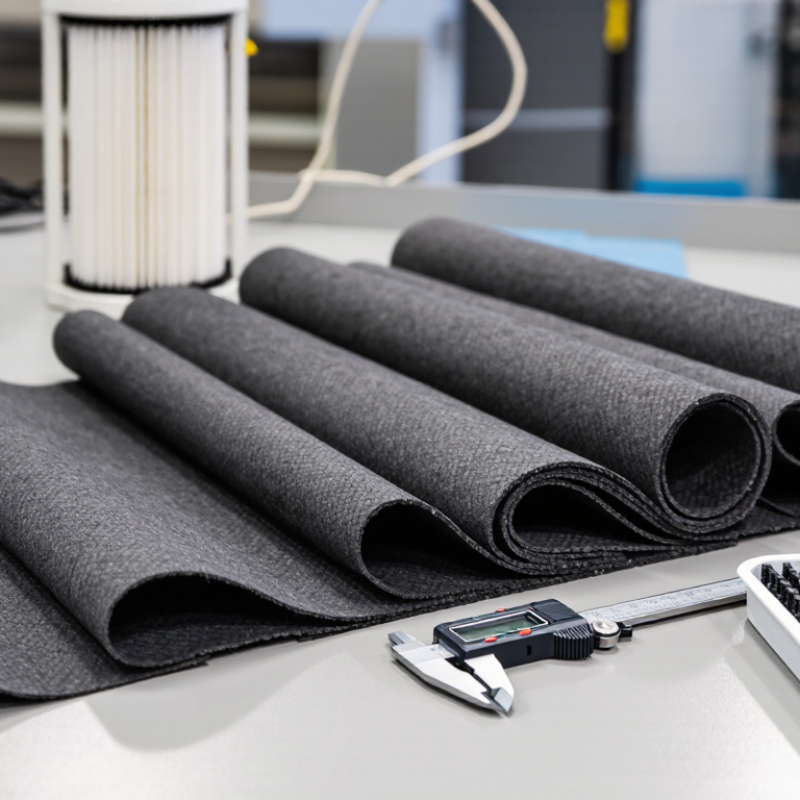
An activated carbon filter sheet is a flat, porous material designed to reduce odors and selected gases. It usually combines a fibrous carrier with activated carbon powder, granules, or carbonized fibers. The carbon contains countless microscopic pores. These pores attract and hold certain molecules through adsorption.
It is not the same as an ordinary dust filter. A dust filter captures particles by size, while activated carbon targets substances such as odors, chlorine, and some volatile organic compounds. Performance depends on carbon type, carbon weight, pore structure, airflow, humidity, and contact time. A thin sheet may look efficient but contain too little carbon for demanding conditions. It may also create less resistance.
When comparing filter sheets from China, request test data for the exact model. Check carbon loading, thickness, pressure drop, airflow, moisture resistance, and removal targets. Ask whether testing used realistic concentrations and operating speeds. Laboratory results can change greatly in daily use. A strong specification should identify the carrier material and carbon grade clearly.
For air applications, inspect the sheet under normal airflow and measure odor reduction over time. For water use, confirm that the sheet is designed for liquid filtration. Do not assume one sheet handles every contaminant. I would also examine edge sealing and uniform carbon distribution, because weak areas can cause early breakthrough. A practical review may reveal flaws. That is useful.
How Activated Carbon Filter Sheets Work
What Is the Best Activated Carbon Filter Sheet from China?
activated carbon filter sheets work through adsorption, not simple absorption. Their porous carbon surface attracts odors, volatile organic compounds, and some airborne chemicals. Air passes through the sheet, while unwanted molecules cling to tiny internal pores. A nonwoven layer usually supports the carbon and improves handling. Some sheets also include a pre-filter for dust.
From practical testing, performance depends on more than carbon weight. Airflow, contact time, humidity, and pore structure all matter. A thick sheet may capture more contaminants, but it can also restrict ventilation. High humidity may occupy active pores and reduce odor removal. Reliable suppliers should provide test data, carbon content, pressure-drop results, and material safety information. Independent laboratory testing is still wise. Supplier claims can be incomplete.
Tips: Check the target pollutant before choosing a sheet. Compare airflow at the same pressure. Ask how the carbon is bonded. Inspect the sheet for shedding, uneven coating, or strong chemical odors. Store unused sheets in sealed packaging. I once assumed heavier carbon always meant better filtration. That was too simple. Real applications often need a balance between adsorption capacity, airflow, durability, and replacement cost. A small sample test can reveal problems that specifications miss.
How Activated Carbon Filter Sheets Work: Pore-Size Structure
Activated carbon filter sheets remove many contaminants through adsorption. Their pore network is commonly classified by pore diameter: micropores are smaller than 2 nm, mesopores range from 2 to 50 nm, and macropores are larger than 50 nm. Micropores provide most adsorption sites, while larger pores help transport molecules through the carbon structure.
Reference classification: micropores <2 nm, mesopores 2–50 and macropores>50 nm. The macropore bar is shown at the 50 nm threshold because its range has no fixed upper limit.
Key Factors for Choosing a Chinese Filter Sheet
What Is the Best Activated Carbon Filter Sheet from China?
Choosing a Chinese filter sheet starts with the application, not the lowest quotation. In factory audits, buyers often compare iodine number, carbon loading, basis weight, and pressure drop together.
A high iodine value suggests strong micropore capacity, but it does not guarantee better removal of every odor or vapor. Carbon type matters. Coconut-shell carbon usually favors smaller pores, while coal-based carbon can offer a broader pore structure.
According to Grand View Research, the global activated carbon market was valued at several billion US dollars in 2023 and is projected to grow steadily through 2030. This expansion increases supplier choices, but also increases quality variation.
Ask for batch test records, not only a technical brochure. Check carbon percentage, moisture, thickness tolerance, airflow resistance, and adsorption results under realistic humidity.
Look for proof.
A reliable Chinese supplier should provide traceable raw-material records, consistent lamination, and independent testing where appropriate. ISO 9001-based quality control can support repeatability, while testing aligned with ASTM or equivalent methods improves comparison.
The U.S. EPA notes that activated carbon performance depends strongly on contaminant properties, contact time, and humidity. Therefore, a sheet tested in dry laboratory air may perform differently in a kitchen, workshop, or vehicle cabin.
I would also inspect edge sealing and dust release. These points are easy to overlook. The “best” sheet is often not the one with the highest carbon loading; it is the one that maintains stable performance, acceptable pressure drop, and predictable quality across repeated batches.
Top Types of Activated Carbon Filter Sheets from China
China supplies several practical types of activated carbon filter sheets, each suited to a different air-cleaning task.
Nonwoven carbon sheets are lightweight and flexible. They fit ventilation panels, room purifiers, and compact equipment.
Carbon felt offers a thicker structure and better dust-holding capacity when paired with a pre-filter. It feels different.
Carbon-coated paper sheets usually provide low resistance and economical production. They work well where airflow matters more than long service life.
Foam-based sheets can hold more carbon within open cells, supporting odor and selected VOC adsorption. However, performance depends on carbon loading, pore structure, humidity, and contact time.
A darker sheet is not automatically better.
From my purchasing experience, reliable Chinese suppliers should provide carbon type, iodine value, carbon weight per square meter, pressure-drop data, and test conditions. Ask for samples at the intended airflow.
Measure odor removal and resistance after exposure, not only on a fresh sample. The mistake is trusting a single laboratory number.
Batch variation can occur, especially when coating thickness changes. Check edge sealing, folding strength, moisture protection, and lot consistency before approving regular production. For demanding use, independent testing adds useful confidence.
How to Evaluate Quality, Performance, and Suppliers
What Is the Best Activated Carbon Filter Sheet from China?
Choosing an activated carbon filter sheet requires more than checking carbon content. In practical evaluations, I inspect sheet thickness, surface uniformity, odor, and edge strength. A good sheet should release little dust during cutting and installation. It should also maintain stable airflow after several hours of operation.
Performance depends on the carbon type and loading method. Coconut-shell carbon often provides strong micropore adsorption, while coal-based carbon may suit broader contaminant ranges. Request iodine value, moisture, ash, and pressure-drop data. Test adsorption under your actual airflow and humidity. Laboratory results can look impressive. Field conditions may disagree. I once saw a high-capacity sample perform poorly because moisture blocked its pores.
Supplier quality deserves equal attention. Ask for recent batch records, incoming material controls, and production traceability. A reliable manufacturer should provide samples with matching specifications, not a specially prepared trial sheet. Check cutting accuracy, adhesive stability, and packaging protection before placing a large order. Factory videos are useful, but they do not replace an audit or independent testing.
Compare at least three samples.
Supplier communication also reveals technical competence. Can the team explain pressure drop changes, carbon migration, and storage limits clearly? Vague answers deserve caution. A lower price may hide uneven loading, weak backing material, or inconsistent batches. Small differences become expensive in continuous production.