2026 Best Non Powered Amusement Equipment for Buyers?
Choosing the best Non Powered Amusement Equipment in 2026 starts with the site, not the catalog. A compact play area may suit climbing frames or spring riders, while a larger park can accommodate obstacle courses, rope structures, and multi-user play systems. The right choice depends on available space, visitor age range, expected use, and the team’s ability to inspect and maintain each unit. That takes planning. It also prevents an attractive purchase from becoming a poor fit.
This guide helps buyers compare equipment by play value, materials, installation needs, maintenance access, and supplier support. It explains why clear specifications matter, including dimensions, capacity guidance, surface requirements, and care instructions. Product descriptions alone are not enough. Ask for relevant test records, warranty terms, spare-part availability, and references where appropriate; then confirm that the equipment suits local requirements and the intended site. A lower price may look appealing, but delivery, installation, and upkeep affect the full cost. No single model is best for every buyer. The practical choice is the one that fits the space, serves its users, and can be managed reliably over time. Even careful comparisons leave room for judgment. That is worth remembering.
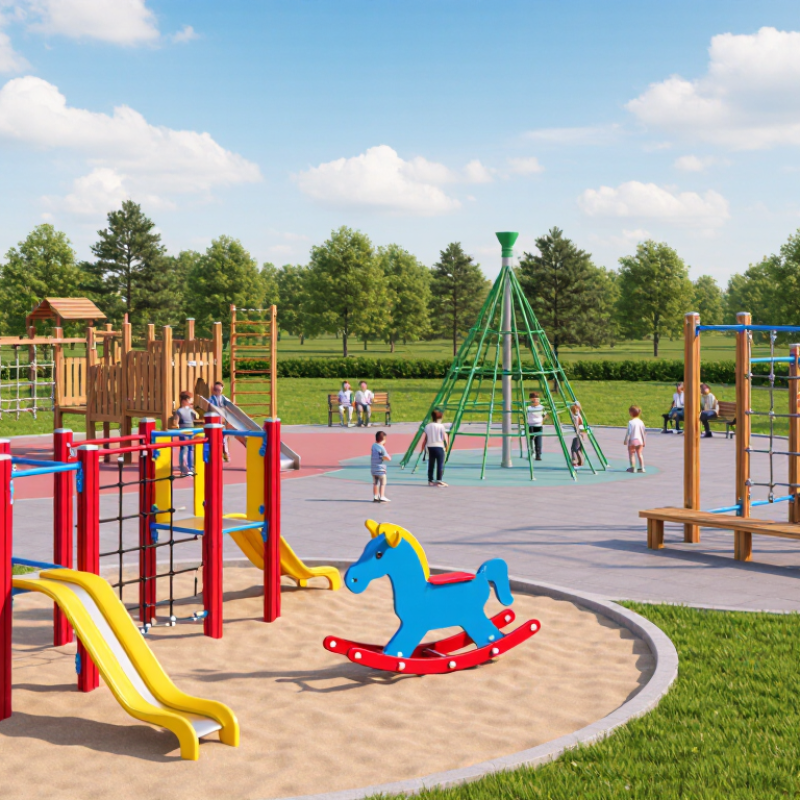
What Qualifies as Non-Powered Amusement Equipment in 2026?
What Qualifies as Non-Powered Amusement Equipment in 2026?
Non-powered amusement equipment delivers play without a motor driving its main movement. Examples include slides, climbing nets, balance beams, and manually crossed rope elements. Users move through them using their own effort, or gravity provides the motion. A powered light or digital counter does not necessarily change the classification. The boundary can be messy. For mixed systems, buyers should check which components drive movement and how the supplier classifies the equipment.
The U.S. Bureau of Economic Analysis reported that outdoor recreation contributed $1.2 trillion to the economy in 2023, equal to 2.3% of GDP. That broad figure signals the sector’s scale; it does not measure demand for any specific attraction. Buyers should assess the equipment’s intended users, setting, throughput, and maintenance needs. ASTM F1487-21 covers public-use playground equipment, but its scope should not be assumed to cover every amusement installation. Check the relevant specification and documentation.
Tips: Inspect connection points, landing zones, and wear surfaces in person. Ask for installation, inspection, and maintenance instructions before purchase. Compare usable capacity, not just footprint. A compact unit can still create a queue.
Which Equipment Types Suit Different Venues and Age Groups?
Choosing non-powered amusement equipment starts with the venue and the children who will use it. For small indoor playrooms, compact slides, crawl tunnels, and soft climbing shapes suit younger children and limited floor space. Keep clear sightlines from seating areas. Toddlers need low platforms, wide steps, and handholds they can grasp easily. Preschoolers often enjoy simple climbing frames and balance paths. Older children may prefer taller structures, nets, and more challenging obstacle courses.
Outdoor parks can accommodate larger climbing towers, rope features, and fixed balance equipment, but allow room for safe circulation around each activity. Match equipment to the intended age range and follow the manufacturer’s installation and inspection guidance. A busy schoolyard may need several play zones to reduce crowding. Check the ground surface, drainage, and access routes before choosing a layout. Even a well-designed structure can feel cramped when queues form. I would also revisit the plan after opening; actual play patterns may differ from expectations.
Tips: Separate high-energy climbing from quieter toddler play. Look for sturdy connections, smooth edges, and age-appropriate steps. Keep a simple inspection log, and review it regularly. Ask staff what children avoid or repeatedly crowd around; small observations can reveal where the layout needs adjustment.
How Should Buyers Compare Capacity, Materials, and Space Needs?
Capacity should reflect real use, not just the largest number in a product sheet. Ask how the rated capacity was calculated and whether it assumes children of a particular age or size. A climbing frame may hold several users, yet one narrow platform can create a bottleneck. Watch how children might move through the equipment, not only how many can stand on it. That matters.
Materials need to match the site. Powder-coated steel may suit exposed areas, while treated timber can feel warmer underfoot but needs regular checks for splinters, cracks, and moisture damage. For ropes, nets, and plastic panels, request details on UV resistance, replacement parts, and inspection intervals. A sample finish can help, but it will not show how a surface wears after years outdoors. That part is easy to underestimate.
Measure the usable area, then include clearance around the equipment, entry paths, and room for caregivers to stand nearby. Check overhead limits, gates, slopes, and the route used to bring components onto the site. A compact unit is not automatically a good fit if its access points face a wall or a busy walkway. I would leave extra space where possible; neat plans often miss real-world movement. Ask the supplier for dimensioned drawings and installation requirements before comparing prices.
What Safety, Accessibility, and Compliance Features Should Buyers Check?
For non-powered amusement equipment, safety starts with how people move through it. Inspect handrails, steps, platforms, and openings at child height. Look for pinch points, sharp edges, loose fasteners, and gaps where clothing could catch. Small details matter. Ask for load ratings and clear age, height, and capacity limits. These should match the way the equipment will actually be used, not just the product description.
Accessibility needs a physical check, too. Can a wheelchair user reach the activity area or participate in part of the play experience? Check approach routes, turning space, transfer points, and seating near the equipment. A ramp alone may not make an activity usable. That can be easy to overlook. Request drawings or measurements, then compare them with the site, including gates, slopes, and nearby surfacing.
For compliance, request current inspection records, installation instructions, material details, and maintenance schedules. Confirm which safety standards and local requirements apply to the equipment and installation site; requirements can vary. Review fall zones and impact-absorbing surfaces, and check that anchors suit the ground conditions. Records are useful, but they do not replace a hands-on inspection. Ask who will inspect wear, corrosion, and shifting parts after opening. Even a tidy checklist can miss something on a busy site, so document concerns and resolve them before use.
2026 Buyer Checklist: Non-Powered Amusement Equipment
Number of practical checks in each review area. These are checklist counts, not industry statistics or a certification score.
Prioritize entrapment and fall hazards, accessible routes and play components, and documentation for standards applicable to the equipment and location. Requirements vary by jurisdiction; consult the relevant authority and qualified inspectors.
How Can Buyers Assess Suppliers, Installation, and Long-Term Costs?
Choosing non-powered amusement equipment is not just a matter of comparing prices. Buyers should ask suppliers for material specifications, load information, maintenance instructions, and references from similar installations. Check welds, rounded edges, fasteners, and the finish on parts children can reach. A tidy product photo proves little. Ask how the equipment performs after several seasons outdoors.
Installation affects both safety and future costs. Confirm who prepares the ground, supplies anchors, and checks the finished structure. Request a site plan showing fall zones, access paths, and drainage. Poor drainage can leave muddy patches beneath a climbing frame. Include delivery, surfacing, assembly, inspections, and replacement parts in the budget. The lowest quote may exclude several of these. Ask how quickly common parts can be supplied, and whether routine repairs require specialist tools. Even careful estimates miss something.
Tips: Get key promises in writing. Visit a comparable site if possible. Measure the installation area yourself, then compare it with the supplier’s plan. Keep a small maintenance log; it may reveal loose bolts or fading surfaces early. One imperfect detail matters: buyers sometimes focus on upfront cost and overlook staff time spent on upkeep.